
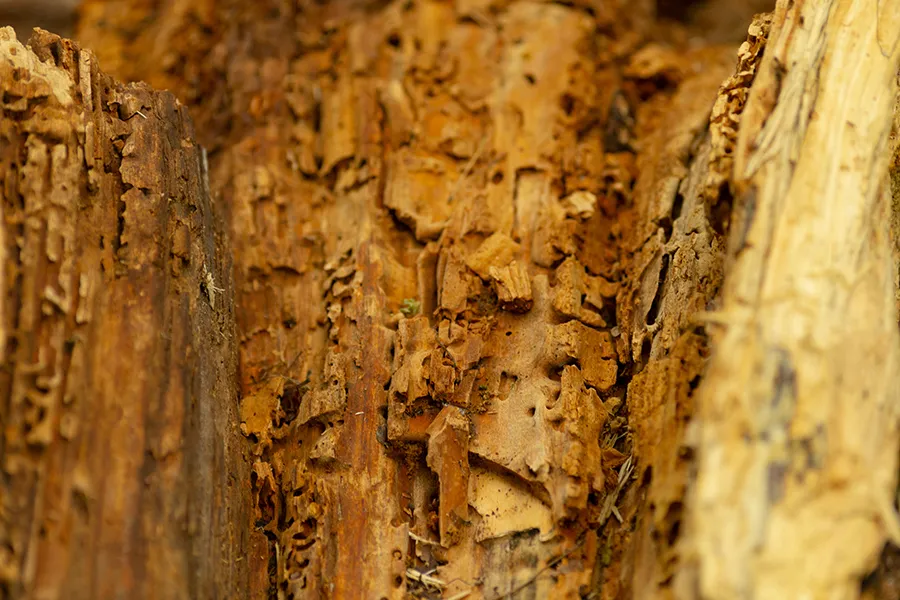
Because termites are rarely seen, diagnosing an infestation requires knowing what the damage they cause looks like, which often manifests in tunneled-through or hollow wood.
Key Takeaways:
- Termite damage can appear in many different parts of the home.
- Look for “bubbling” paint (air pockets behind drywall paper) or blistering laminate flooring. Water damage and termite damage often look alike, so homeowners should learn the differences.
- Piles that look like sawdust, salt, or pepper may actually be fecal pellets called “frass.”
- If you find damage, do not rip the wall open. This can cause the colony to split and spread deeper. Call a professional.
How to Look for Termite Damage
Although termite damage is often well-hidden within the structure of a home, established or severe infestations will start to show obvious signs. The appearance of termite damage can vary, but it is diagnosed through wood damage, broken flooring, sagging ceilings, and more. Diagnosing an infestation requires distinguishing between structural stress, water damage, and active termite feeding.
The most visible signs may be seen in the following areas of the home:
- Walls
- Ceilings
- Foam insulation
- Slabs
- Drywall
- Flooring
- Tiling
- Windows
What Does Termite Wood Damage Look Like?
Everyone knows that termites feast on wood, but what does a board or piece of wood look like after it’s been infested by a termite?
Here’s what to look for:
- Hollow Wood
The most defining characteristic of termite damage is hidden voids. On the surface, the wood may look perfectly normal. In advanced cases, you may see the wood surface rippling or crushing inward, as only a thin veneer of paint or varnish remains.
- How to Test: Tap your baseboards or window frames with the handle of a screwdriver. Healthy wood sounds solid (a dull “thud”). Termite-damaged wood sounds hollow and papery.
- “Water” Damage
Say Goodbye to Pest Problems for Good!
Termite damage is easily misdiagnosed as water damage because both cause wood to buckle and paint to bubble.
Water damage usually causes wood to swell, turn dark/spongy, and rot in “cubical” square chunks. Termite damage creates smooth, clean tunnels running parallel to the wood grain.
- How to Tell Them Apart: If you break off a piece of damaged wood and see mud or soil lining the inside, it is 100% termites, not just rot.
- Frass
If you see piles of what looks like sawdust, salt, or pepper near your baseboards, look closer.
Drywood termites push their fecal pellets (frass) out of the colony through “kick-out holes.”
- How to Recognize Frass: These pellets are uniform in shape and are a definitive sign of active infestation. This is one of the best ways to spot drywood termites.
Recognizing Termite Damage by Material
- In Drywall & Sheetrock: “Bubbling” Paint: This looks like a water blister but is actually a tunnel just below the paper surface of the drywall. Pinholes: Tiny holes (the size of a needle tip) capped with a speck of dirt. This is often where “swarmer” termites have exited the wall.
- In Flooring: Laminate/Hardwood: Blistering or sagging that looks like water damage. Tile: Loose tiles that sound hollow when walked on (caused by termites eating the sub-floor moisture barrier).
- In the Foundation: Mud Tubes: Subterranean termites build pencil-sized tunnels made of mud and saliva to cross concrete foundations. These “superhighways” protect them from drying out as they travel from the soil to your siding.
What to Do If You Find Termite Damage
If you find signs of damage, do not rip the wall open. Disturbing an active termite colony often causes them to retreat further into the home or split into new sub-colonies. If you spot these signs, tape over the area and call a professional termite control expert immediately for a closer inspection.