
Skip to content
Bats hanging upside down sleeping | Active Pest Control serving Georgia
Need bat control? Get a free, no-obligation quote.
Bats hanging upside down sleeping | Active Pest Control serving Georgia
Need Bat Control? Get a Free, No Obligation Quote

Bat Control & Removal

Serving Atlanta Metro | Columbus | Augusta | Savannah

Most homeowners encountering their first bat issue have no idea what to do. And that makes sense! Bat infestations are unique problems that can’t be boxed in with other kinds of pest problems. Whether you’ve just discovered bats in your shed, awning, or attic for the first time or you’re looking to get ahead of recurring intrusions, it’s best to leave the work to professional bat removal experts.

At Active Pest Control, we provide safe, humane, and legally compliant bat control and exclusion services in Georgia, including the Greater Atlanta Metro area. Our team will work with you to develop a bat removal plan that suits your property and unique needs. 

Call us today to schedule an expert assessment from an experienced bat control professional.


Bat “Blackout Dates” in Georgia

In Georgia, state and federal laws protect bats as beneficial non-game wildlife. Bat removal and exclusion are strictly prohibited during seasonal blackout periods to protect bat populations during vulnerable stages of their life cycle.

  • April 1st – August 15th (Maternity Season Blackout): Pregnant bats gather in attic and wall spaces to give birth. Flightless bat pups cannot leave through one-way exclusion valves. Blocking entry points during this window traps baby bats inside, leading to pup mortality, decomposition odors, insect infestations, and trapped adult bats forcing their way into living quarters.
  • November 1st – March 31st (Winter Hibernation Period): During colder months, bats enter torpor (hibernation). Because they are inactive and do not leave the structure nightly to feed, one-way exclusion devices will not work and will cause bats to starve inside.

Is Any Type of Bat Control Allowed During the Blackout Periods?

When you have a bat infestation during a blackout period, your options are constrained by various state and federal protections. It’s important to understand what you can do and what’s illegal.

AllowedProhibited
  • Comprehensive Inspections: Identifying species, roost size, and mapping entry points.
  • Disturbing Maternity Roosts: Attempting to trap, harass, hand-capture, or relocate flightless pups or mothers during the pup-rearing season.
  • Interior Sealing: Closing cracks between the attic and interior living spaces so bats cannot enter bedrooms or hallways.
  • Exterior Exclusion & Sealing: Installing one-way valves, netting, or sealing active exterior flight holes while flightless bat pups are inside. (This traps young bats, leading to death and decomposition inside walls).
  • Emergency Living-Space Capture: Safely capturing a single bat isolated inside human living spaces for rabies testing or release.
  • Winter Eviction: Installing exclusion devices while bats are in torpor, as they cannot fly out to clear the building.


Our Bat Removal and Exclusion Team Keeps Bats Away For Good

Any dark, sheltered spaces in our homes and businesses are susceptible to being taken over by bats. What’s worse, once they’re already there, it’s much more of a hassle to try to get rid of them than it would have been to put proper preventative measures in place. To keep bats out of the structures on your property, you have to eliminate vulnerabilities and make the space less attractive to them.
 

What to Do If a Bat Comes into Your Home

Dealing with a bat problem? The Active Pest Control bat removal team recommends the following to deter bats:

  1. Don’t panic. Remain calm: Don’t try to pick up the bat or handle it. It’s unlikely to try to cause harm if you keep a safe distance. 
  2. Confine it to a single room if possible: Make sure you know where the bat is located at all times.
  3. Do not attempt to trap or chase the bat: Harming bats is illegal in most instances and you may get bitten.
  4. Call a local bat control company like Active Pest Control: Bat control is not a DIY job. Be sure you work with a professional.


Bat Control Services for YOUR HOME

Our Bat Removal Process

Safe, effective, and environmentally responsible plans are necessary for developing sustainable bat control practices. With over 45 years of experience, you can be sure that your family is in good hands when we take care of your bat removal needs.

Our bat exterminators will take the following steps to keep your family and home safe from bats:

  • Thorough inspection: If you have a bat problem, our bat control technicians will conduct a complete property inspection to determine the sources of the outbreak and all of the infested areas.
  • Bat removal: Once the root of the problem has been discovered, our bat exterminators will implement safe and effective bat pest control strategies pertinent to the nature of your infestation.
  • Prevention services: After the treatment is done, our bat control team will provide you with a number of prevention tactics you can take on your own to ensure that the bats don’t come back.

Why Choose Active Pest Control for Georgia Bat Services?

No two ways about it – dealing with bats in your home is stressful. Deciding on the right bat removal company shouldn’t be. With Active Pest Control, you’ll know the problem is in capable hands from the moment you call. Here’s what you can expect:

  • Fast, humane, legal solutions: We implement safe and legally compliant measures like one-day exclusion doors, bat cones, and netting. Our team thoroughly understands local and federal regulations surrounding bat control.
  • Licensed local bat control and exclusion experts: We train our experts to correctly identify the bat species and roosting behavior. We know how to remove them quickly and ensure they won’t return.
  • Clear communication every step of the way: We’ll clearly explain your any proposed actions and answer all of your questions. We keep you informed every step of the way.
  • Easy online account management: Schedule services, manage your account, and make payments online with one easy login.
  • Ongoing support: Stop future bat intrusions with our expert recommendations and long-term prevention tips.


Georgia’s Best Bat Control Experts

When to Call an Exterminator For Bat Control

If you’ve tried everything you can think of to prevent or remove bats from your home to no avail, it’s time to reach out to your local pest control company. The bat removal experts at Active Pest Control have years of experience dealing with bat infestations in Georgia homes and businesses. We are ready to help make your bat problems a thing of the past—contact us today to get started!


Bat Control FAQs

Bat control in Georgia can be a complex topic, especially when you consider legal protections and blackout dates. At Active Pest Control, we have extensive experience with bat removal and exclusion in the area, and we’ve compiled this list of frequently asked questions. If you don’t find your answer here or you’re ready to schedule professional bat services, reach out to our team today.


What are the main dangers of bats in Georgia?

The two biggest risk factors with bats are diseases that can be transmitted through bites, contact, or their waste. They are:

  1. Rabies. Bats are the second most common carriers of rabies. This virus can be transmitted if you or your pet is bitten by a bat. It can also be transmitted through bat fur or blood.
  2. Histoplasmosis. Perhaps the biggest threat of bats is the fact that their droppings, known as guano, carry the fungus Histoplasma capsulatum. When the droppings dry, the fungus becomes airborne and, when breathed in, can cause a lung infection that is extremely dangerous.

Bat guano resembles dark rodent droppings, but unlike mouse or rat droppings, guano crumbles easily into powdery, metallic-flecked dust when crushed (due to digested insect exoskeletons). It frequently accumulates in piles beneath entry points, in attic spaces, or along exterior walls.

Yes, cleaning up guano yourself is hazardous. Accumulated guano provides a breeding ground for Histoplasma capsulatum, a fungus whose airborne spores cause a serious respiratory infection called histoplasmosis when inhaled. Safe cleanup requires specialized personal protective equipment (PPE), HEPA-filtered vacuuming, and professional-grade sanitization.


Generally, standard homeowners insurance policies do not cover routine bat removal, exclusion, or pest control, as insurers consider infestation prevention a standard home maintenance responsibility. However, if a bat infestation causes extensive structural damage or requires full attic restoration and insulation replacement, portions of the repairs may be eligible for coverage depending on your policy. It is best to check directly with your insurance provider regarding wildlife damage clauses.


The exclusion phase typically takes between 3 and 7 days, depending on weather conditions and the size of the colony. Once technicians install one-way exclusion valves over primary access points, bats exit at night to feed but cannot re-enter. After monitoring confirms every bat has left the structure, technicians return to remove the devices and permanently seal all remaining entry points, completing the full process in just over a week.


While full-colony exclusion is strictly prohibited by law during Georgia’s blackout periods (May 1st–August 15th for maternity season and November 1st–March 31st for hibernation), human health and safety take priority. If a bat enters your immediate living area (bedroom, hallway, main floor), technicians can perform emergency containment, safely capture the single bat, and seal internal pathways leading into the living space. They will also conduct an exterior inspection to prepare a full exclusion plan for as soon as the blackout window closes.


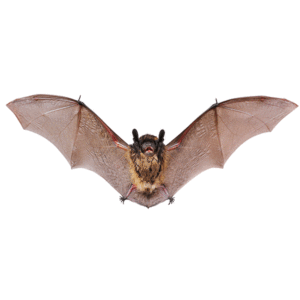
The most frequent species found roosting in structures throughout northern and central Georgia include:

  • Little Brown Bat (Myotis lucifugus): Known for forming dense maternal colonies in warm, dark attic spaces.
  • Evening Bat (Nycticeius humeralis): Small, dark brown bats commonly found in attics, wall cavities, and hollow structures.
  • Big Brown Bat (Eptesicus fuscus): A hardy, widely distributed species that often roosts in residential attics and chimneys year-round.
  • Brazilian (Mexican) Free-Tailed Bat (Tadarida brasiliensis): Highly active in urban environments and known for roosting in high-rise structures, roofs, and soffits.


Not by itself. While a bat house provides an excellent alternative habitat for local wildlife, an active colony will almost always prefer the climate-controlled, predator-free environment of your home’s attic over an outdoor box. Installing a bat house works best in conjunction with professional exclusion—once your home is completely sealed, the nearby bat house gives the displaced colony an immediate place to relocate away from your structure.


You should not attempt DIY bat removal. Trying to remove or capture bats yourself is dangerous, frequently illegal, and rarely solves the problem for several key reasons:

  • Legal Risks: State and federal regulations protect bat populations. Killing bats or performing exclusion during protected blackout windows carries heavy legal penalties.
  • Health & Bite Hazards: Panicked bats will bite or scratch in self-defense, posing significant rabies transmission risks. Handling guano without professional respirator equipment also exposes you to histoplasmosis spores.
  • Incomplete Sealing: Bats can squeeze through cracks as small as 3/8 of an inch (the size of a dime). Repellents, lights, or foil may disturb them temporarily, but without complete, structural sealing using professional materials, they will quickly return.
  • Trapping Pups Inside: If you seal entry points yourself during spring or summer without professional knowledge, you risk locking mother bats outside while leaving flightless babies trapped inside—leading to decaying carcasses, severe odors, and insect infestations in your walls.

Effective bat control requires trained wildlife technicians who use specialized one-way doors, proper safety gear, and commercial-grade sealants to solve the infestation safely, humanely, and legally.


Rated 5 out of 5

Active Pest Control Reviews

We really appreciate that Jeff is always on time! He always wears show covers from before the pandemic. Gives us an explanation of what he is doing makes us comfortable. Thank you so much, he is wonderful!

– Chihiro Oguchi

Pest Control You Can Trust

At Active Pest Control, we protect against the disease and damage that can be caused by common pests.