
Mosquito Swarms: What Are They and What Can You Do?
Serving Atlanta Metro | Columbus | Augusta | Savannah
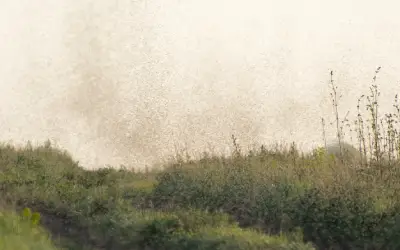 If you’ve stepped outside on a warm afternoon only to walk right into a thick, buzzing mosquito swarm, your first instinct is probably to run back indoors and grab the bug spray. Seeing a dense cloud taking over your lawn, driveway, or patio is frustrating, and it is easy to assume your yard is suddenly overrun by thousands of biting pests.
Before you panic, take a closer look at how those bugs are behaving. Here is the secret: They’re probably not mosquitoes. How do we know? Because mosquitoes don’t actually swarm like that. Unlike gnats or midges, true mosquitoes are solitary hunters. They don’t hover in large, synchronized clouds over your grass—they stalk hosts individually, flying low to the ground and targeting you one-on-one.
Key Takeaways:
- Dense, cloud-like swarms hovering at eye level in your yard are almost certainly harmless, non-biting midges rather than mosquitoes.
- Mosquitoes are weak fliers that rarely travel far from where they hatch, making standing water on your immediate property their primary breeding source.
- Combining standing water removal with barrier treatments targeting adult resting areas offers the most effective long-term yard protection.
What Are “Mosquito Swarms”? (Mosquitoes vs. Midges)
When you see a dense, cloud-like swarm hovering in your yard, you are likely looking at non-biting midges (often called “blind mosquitoes”).
Insect | Swarming Behavior | Bite Risk | Breeding Ground |
Non-Biting Midges (Chironomidae) | Form large, hovering “mating clouds” (gnat-balls) at dusk. | Do not bite. No proboscis. | Lakes, retention ponds, drainage ditches. |
True Mosquitoes (Aedes & Culex) | Do not form large mating swarms. They stalk hosts individually. | Bite. Females require blood meals to lay eggs. | Small, stagnant water containers around yards. |
Say Goodbye to Pest Problems for Good!
Why Warming Temperatures Trigger Insect Activity
- Dormancy Break: As soon as North Georgia and Coastal Georgia temperatures consistently top 50°F, overwintering eggs and adult mosquitoes wake up.
- Shortened Life Cycles: Warm snaps accelerate the transition from larva to flying adult.
- Rains & Humidity: Rainfall fills containers, clogged gutters, and corrugated drainpipes, providing immediate breeding habitats.
Even though hovering clouds may be harmless midges, they prove that local microclimates are warm enough for Asian Tiger Mosquitoes (Aedes albopictus) and Northern House Mosquitoes (Culex pipiens) to begin their breeding cycles.
Why Georgia’s Mild Winters Lead to More Active Mosquito Seasons
A mild winter in Georgia does very little to suppress local pest populations. Hard, prolonged freezes are required to kill off overwintering adult mosquitoes hiding in pine straw, dense shrubs, and under decks.
Without those sustained freezes, higher baseline populations survive into the warmer months. Once rains hit, mosquito populations exponentially compound every 7 to 10 days.
Extended seasonal activity increases the risk of local vector-borne diseases monitored by the Georgia Department of Public Health, including West Nile Virus and Eastern Equine Encephalitis (EEE).
What to Do About Mosquitoes in Georgia
To stop larvae from becoming an uncontrollable infestation, combine personal protection with aggressive source reduction.
Action Level | Target Area | Key Prevention Step |
1. Source Reduction | Standing Water | Dump excess water from gutters, plant saucers, and tarps weekly. |
2. Physical Barriers | Entry & Living Spaces | Repair damaged window screens and use patio fans to disrupt flight. |
3. Personal Defense | Skin & Clothing | Apply EPA-registered repellents containing 20–30% DEET or Picaridin. |
4. Yard Treatment | Resting Zones | Target adult resting areas like dense foliage, shrubs, and under decks. |
1. Eliminate Local Breeding Sources (Source Reduction)
Female Aedes mosquitoes rarely fly more than 100 to 300 feet from where they hatch. The mosquitoes biting you in your yard were likely bred on your property or your immediate neighbor’s. This is why eliminating mosquito eggs and larvae is so important.
- Drain Hidden Water: Weekly, empty potted plant saucers, birdbaths, tarps, wheelbarrows, and outdoor pet bowls.
- Clear Gutters & Drainage: Clogged rain gutters and sagging corrugated flex-pipe extensions are primary breeding grounds for Culex mosquitoes.
- Manage Yard Vegetation: Trim overgrown shrubs, ivy, and heavy groundcover where adult mosquitoes shelter from direct sunlight during daytime heat.
2. Apply Effective Personal Protection
- Use EPA-Registered Repellents: Choose repellents containing 20–30% DEET, Picaridin, or Oil of Lemon Eucalyptus (OLE). (Note: 100% DEET is unnecessary and offers diminishing returns over standard 20-30% formulas).
- Create Air Movement: Mosquitoes are weak fliers. Positioning an oscillating fan on your deck or patio creates a wind barrier that deters bites.
- Ditch Bug Zappers: Electric bug zappers kill thousands of harmless, beneficial insects (including midge predators) while attracting mosquitoes to your outdoor living space without effectively reducing bite rates.
For more information, check out our article on preventing mosquito bites.
3. Targeted Professional Yard Treatments
Eliminating standing water addresses eggs and larvae, but it won’t stop adult mosquitoes migrating from surrounding areas. Professional barrier treatments treat the underside of foliage, decks, and shaded structures—killing adult mosquitoes on contact where they rest during the day.
For Georgia homeowners looking to eliminate swarms and break the breeding cycle before peak heat, professional seasonal protection ensures your outdoor space remains safe and comfortable.
Take Back Your Lawn with Professional Georgia Mosquito Control Services
While DIY maintenance and repellents help reduce bites, breaking the mosquito breeding cycle across a Georgia property requires targeted intervention. Standalone DIY methods won’t stop adult mosquitoes migrating from shaded foliage, ivy, or neighboring yards.
Investing in a professional mosquito barrier treatment ensures your outdoor living space stays protected all season long. A licensed local mosquito control technician can pinpoint hidden breeding micro-habitats, treat adult resting zones on the undersides of leaves and decks, and apply larvicides to non-drainable standing water.
Ready to enjoy a mosquito-free yard? Don’t let biting pests force you indoors. Contact Active Pest Control today for a free estimate on a customized mosquito control plan for your Georgia property. Take control of your lawn before peak summer heat sets in!
Back to Professional Mosquito Control & Exterminator Services


