Asian Lady Beetles in Georgia
Health RiskLow
Damage RiskNo Risk
NuisanceLow
How to Identify Asian Lady Beetles
These insects are known for their rounded, compact bodies, protective outer wing covers, and strong jaws adapted for chewing.
- Actual Size 5 to 8 mm
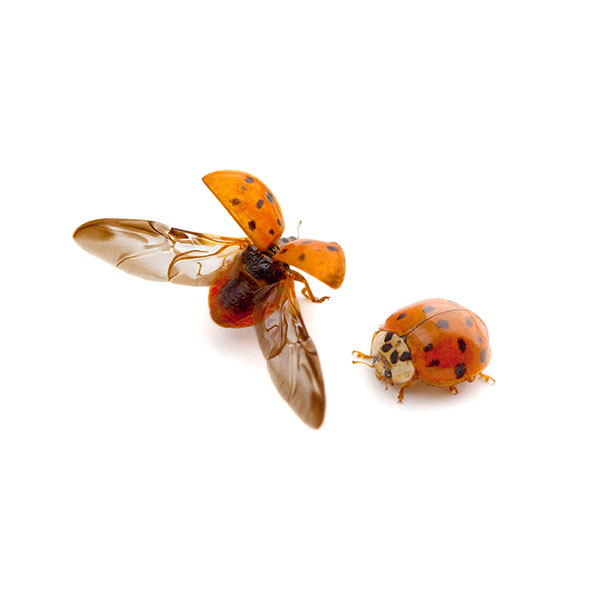
- Characteristics Small, dome-shaped beetles with hard bodies, typically orange or reddish with black spots, known for crawling and flying, especially when temperatures change.
- Legs 6
- Antennae Yes
- Wings Yes, with hardened forewings that protect a second pair of wings used for flight
What Do Asian Lady Beetles Do?
These insects are attracted to plants, pests like aphids, and sweet substances, and while feeding, they can move across various surfaces, occasionally entering homes in large numbers.
- Asian lady beetles are a widespread species of beetle found in many regions and are known for their ability to adapt to both outdoor and indoor environments.
- They are most active when searching for food, primarily feeding on aphids and other soft-bodied insects found on plants and trees.
- While they do not typically spread disease, Asian lady beetles can create annoyance when they cluster in large numbers indoors and leave behind stains or odors.
- Their ability to move between outdoor vegetation and indoor structures makes them a frequent seasonal invader in residential areas.
Where Do You Find Asian Lady Beetles?
These insects often appear in areas with abundant plant life and prey such as aphids, and they become more noticeable during warm weather or when temperatures begin to drop. Places you’re likely to encounter Asian lady beetles include:
- Gardens and flower beds
- Trees and shrubs in landscaped areas
- Meadows and grassy outdoor spaces
- Exterior walls of homes and buildings
- Window frames and sunny siding surfaces
- Attics and wall voids when overwintering indoors
- Window sills and indoor light sources
- Rooflines and eaves
What Should I Do If I Have Asian Lady Beetles in Georgia?
Asian lady beetles may create sanitation concerns when they move from outdoor plant environments into homes, particularly during seasonal changes when they seek overwintering sites. If Asian lady beetles are becoming a problem, the following steps are recommended:
- Inspect your home and property for entry points such as cracks, gaps, and damaged screens, and seal them properly to help prevent Asian lady beetles from entering.
- Remove outdoor attractants such as excess vegetation, leaf litter, and sheltered areas near the home where Asian lady beetles may congregate.
- Improve moisture and climate control indoors by sealing openings around windows, doors, and siding where beetles often enter during seasonal shifts.
- Vacuum up any beetles that enter the home instead of crushing them, as they can release a strong odor when disturbed.
- Contact a professional pest control service if Asian lady beetle activity becomes persistent, as they can provide targeted treatment and long-term control solutions.
Top 5 FAQs About Asian Lady Beetles in Georgia
Got questions about Asian lady beetles? Begin with our FAQ section below, and contact us by phone or email if you need more help.
Are Asian lady beetles the same as ladybugs?
They are closely related and look similar, but Asian lady beetles are more likely to enter homes in large numbers and may have slightly different color patterns.
Why do Asian lady beetles come into houses?
They enter buildings in the fall seeking warm, sheltered places to overwinter, often gathering on sunny exterior walls before moving inside.
Are Asian lady beetles harmful?
They are not dangerous to humans, but they can bite, release a foul-smelling fluid, and become a nuisance when indoors.
How can I prevent Asian lady beetles from entering my home?
Seal cracks and gaps, repair screens, and weatherproof doors and windows to reduce entry points.
How do I get rid of Asian lady beetles indoors?
Vacuuming is the best method for their removal. For large or recurring infestations, professional pest control may be needed.