Japanese Beetles in Georgia
Health RiskLow
Damage RiskLow
NuisanceLow
How to Identify Japanese Beetles
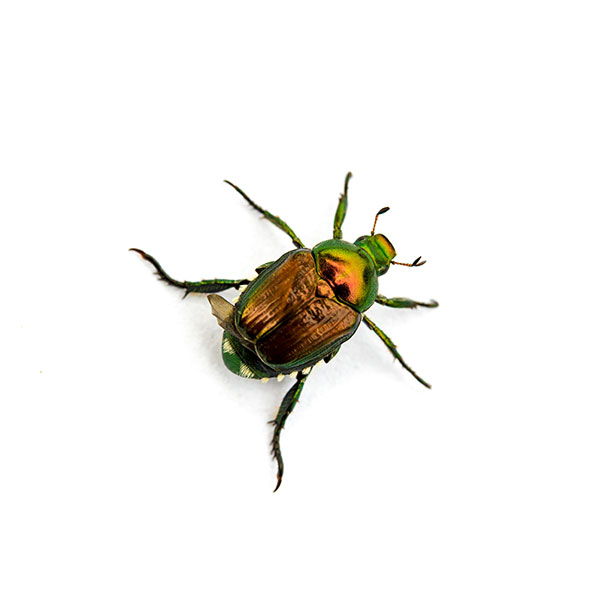
Japanese beetles are medium-sized beetles with metallic green bodies, copper-colored wing covers, and chewing mouthparts used for feeding on plant leaves, flowers, and fruits.
- Actual Size 8 to 11 mm
- Characteristics Metallic green beetles with copper-colored wing covers and an oval, slightly rounded body.
- Legs 6
- Antennae Yes
- Wings Yes, with hard protective outer wing covers
What Do Japanese Beetles Do?
Japanese beetles travel across plants and garden areas in search of food, often appearing in greater numbers when seasonal conditions support their development.
- Adult Japanese beetles commonly feed on leaves, flowers, and fruit, often skeletonizing plant foliage by eating tissue between the veins.
- They are strong flyers and can travel between plants and gardens while searching for food sources.
- Their larvae live underground and feed on grass roots, which can damage lawns and turf areas over time.
- Adult beetles release aggregation pheromones that attract more beetles to the same feeding sites, increasing infestation size.
Where Do You Find Japanese Beetles?
Japanese beetles are often found in plant-rich outdoor habitats where they gather to feed, and they become more noticeable during warm weather when populations peak. Places you’re likely to encounter Japanese beetles include:
- Rose gardens and ornamental flower beds
- Lawns and turfgrass areas where larvae feed on roots
- Vegetable gardens and backyard produce plots
- Fruit trees such as apple, peach, and plum orchards
- Grape vines and vineyard areas
- Shrubbery and hedgerows in residential landscapes
- Parks and public green spaces with flowering plants and trees
- Agricultural fields with broadleaf crops and surrounding vegetation
What Should I Do If I Have Japanese Beetles in Georgia?
While not a threat to buildings, they can gather in noticeable numbers on plants and in yards during warm weather. If Japanese beetles are becoming a concern, the following steps are recommended:
- Hand-pick beetles off plants in the early morning when they are less active and drop them into soapy water.
- Remove and dispose of heavily damaged leaves or plant material to reduce attraction and spread.
- Use protective netting or row covers on valuable plants to prevent beetles from feeding.
- Keep lawns healthy and well-maintained to reduce larval habitat in the soil.
- Remove or treat nearby plants that are heavily infested to limit population buildup.
- Contact a professional pest control service if infestations become widespread or difficult to manage.
Top 5 FAQs About Japanese Beetles in Georgia
Want to learn more about Japanese beetles? Review the FAQ section below, and contact us by phone or email if you still have questions.
Why are they called Japanese beetles?
They are called Japanese beetles because they were first identified in the United States after being introduced from Japan in the early 1900s.
What plants do Japanese beetles eat?
They feed on over 300 plant species, including roses, grapes, fruit trees, linden trees, and many ornamental shrubs and flowers.
What kind of damage do Japanese beetles cause?
They chew leaves between the veins, creating a skeletonized appearance, and can also damage flowers and fruit, reducing plant health and aesthetics.
When are Japanese beetles most active?
They are most active during summer months, especially in warm, sunny weather when adults emerge to feed and mate.
How can I manage Japanese beetles?
Management includes hand-picking, protecting plants with netting, maintaining healthy lawns, and using professional pest control treatments for severe infestations.