Black Widow Spiders in Georgia
Health RiskMedium
Damage RiskNo Risk
NuisanceHigh
How to Identify Black Widow Spiders
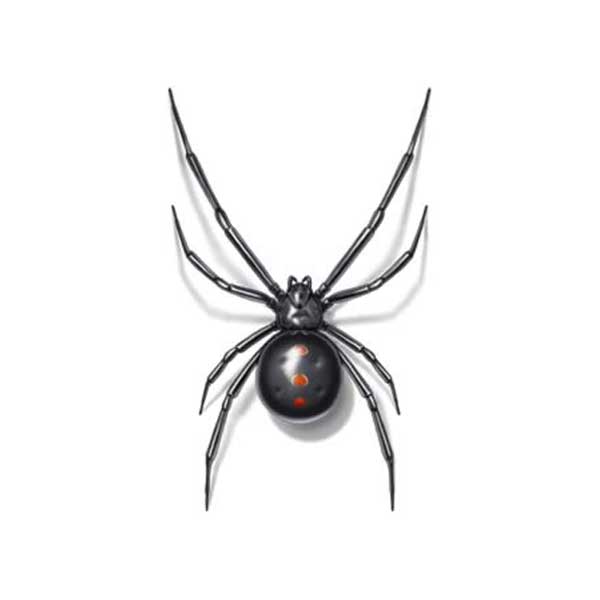
Venomous spiders with glossy black bodies, long legs, and irregular webs that are often identified by the distinctive red hourglass marking on the underside of the abdomen.
- Actual Size 1 to 2 inches leg span
- Characteristics Dark colored spiders with bulbous abdomens, smooth, glossy bodies, and red markings.
- Legs 8
- Antennae No
- Wings No
What Do Black Widow Spiders Do?
Attracted to dark, sheltered spaces such as garages, sheds, crawl spaces, and woodpiles, black widow spiders often remain hidden while building irregular webs near the ground.
- Highly venomous, affecting the nervous system and can cause symptoms such as severe pain, muscle cramps, and nausea.
- Females are much larger than males. Adult female black widows are significantly bigger and are responsible for nearly all medically significant bites.
- Black widows build irregular webs. Unlike orb-weaving spiders, they create tangled, messy-looking webs in protected locations.
- Their egg sacs can contain hundreds of eggs. A single female may produce multiple egg sacs during her lifetime, each holding several hundred spider eggs.
Where Do You Find Black Widow Spiders?
Often inhabiting secluded indoor and outdoor locations, black widow spiders thrive in areas that provide protection, web-building opportunities, and access to food sources. Places you're likely to encounter black widow spiders include:
- Garages
- Sheds and outbuildings
- Woodpiles
- Crawl spaces
- Basements
- Under outdoor furniture such as patio chairs, tables, benches, and grills
- Utility boxes and meter boxes
- Around rock piles, landscaping materials, and debris
What Should I Do If I Have Black Widow Spiders in Georgia?
Black widow spiders may establish themselves around homes when suitable shelter and insect prey are available, often occupying garages, sheds, crawl spaces, and other secluded areas. If black widow spiders are becoming a problem, the following steps are recommended:
- Reduce clutter around your property to eliminate hiding places in garages, sheds, basements, crawl spaces, and storage areas.
- Wear gloves when handling firewood, boxes, or outdoor equipment that has been sitting undisturbed for long periods.
- Seal cracks and gaps around doors, windows, vents, and foundations to reduce spider access to your home.
- Store firewood, lumber, and outdoor materials away from your home's foundation to make the area less attractive to spiders.
- Contact a pest control professional if you continue finding black widow spiders or if spiders are present in areas where people or pets may be at risk of accidental contact.
Top 5 FAQs About Black Widow Spiders in Georgia
Have questions about black widow spiders? Review the FAQ section below first, and reach out by phone or email if you have further concerns.
Are black widow spiders aggressive?
No, they are not naturally aggressive. They usually bite only when accidentally disturbed, trapped, or threatened.
How dangerous is a black widow spider bite?
Their venom is medically significant and can cause muscle pain, cramps, sweating, and nausea, though severe complications are uncommon with proper treatment.
What should you do if you are bitten by a black widow spider?
Seek medical attention right away. Clean the bite area with soap and water, apply a cold compress to reduce swelling, and try to remain calm to slow the spread of venom. Avoid home remedies that delay treatment.
How do black widow spiders get into homes?
They often enter through cracks, gaps, or open doors and may also be brought in accidentally through firewood, boxes, or outdoor equipment.
How can I prevent black widow spiders around my home?
Reduce clutter, seal entry points, wear gloves when handling stored items, and inspect dark areas regularly. If spiders persist, contact a professional pest control service for help.