
Learning how to spot signs of a termite infestation is a valuable skill for any Georgia homeowner.
Key Takeaways:
- There are many signs of termites that can help you spot an infestation early – if you know what to look for.
- If you find a mud tube, break a small section. If it is rebuilt within a few days, the infestation is active.
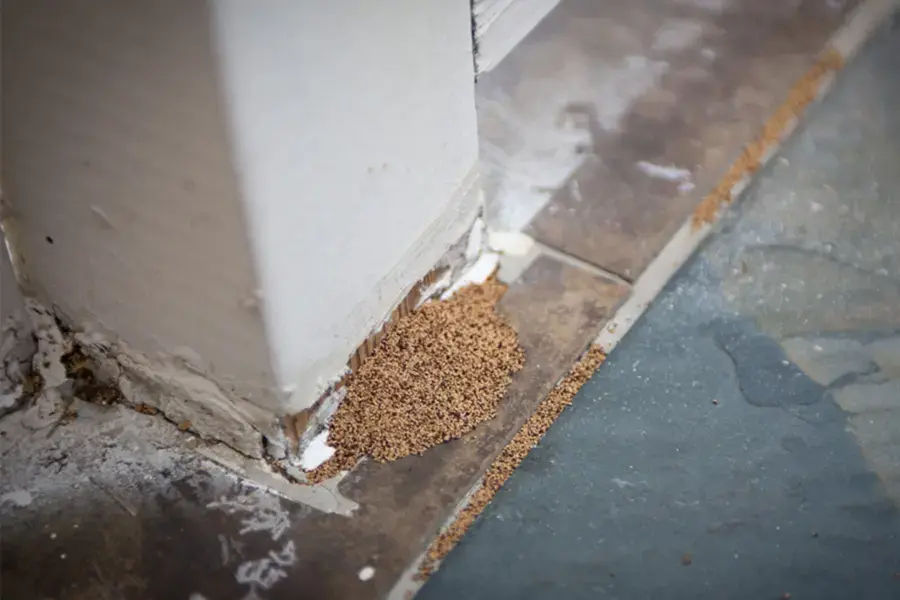
- Drywood termites leave piles of pellets that look like sawdust or pepper (frass).
- In quiet rooms, you can sometimes hear soldier termites banging their heads against the wood to signal danger.
- Termites create moisture while eating. If a door or window suddenly sticks or becomes hard to open, it may be due to termite-induced swelling in the frame.
- If paint or wallpaper bubbles, but there is no water leak, it is often termites eating the paper backing of the drywall.
Most Common Signs of Termite Infestations
Termites are rarely seen, so it’s essential to know what signs to keep an eye out for when trying to figure out if you have an infestation. The most common signs that signal the presence of termites include:
- Damaged or hollow-sounding wood
- Mud tubes
- Termite droppings (known as frass)
- Swarmers or piles of shed wings
- Blisters in wooden flooring
- Cracked or bubbling paint
- Small holes in drywall
Finding Termite Evidence in Your House
Termites are notoriously difficult to catch in the early stages, and unfortunately, are often only noticed when extensive damage has already been done. By knowing the signs of termites and staying vigilant about inspecting your own home for them, you might get lucky enough to catch the presence of termites early on.
Mud Tubes
These pencil-sized tunnels run from the soil up your foundation. They act as “covered highways” protecting termites from drying out.
- The “Break Test”: If you find a mud tube, break off a one-inch section. If the tube is rebuilt within a few days, the colony is active. If it remains broken, the infestation may be old—but you still need a pro to verify.
“Frass”
Unlike Subterranean termites (which use their waste to build tunnels), Drywood termites want a clean nest. They bore tiny “kick-out holes” in the wood to push out fecal pellets.
- The Look: These pellets (frass) look like a pile of sawdust, coffee grounds, or pepper. If you clean it up and it returns a few days later, you have active termites above that spot.
Say Goodbye to Pest Problems for Good!
“Bubbling” Surfaces
Termites eat the soft cellulose behind your wall coverings.
- The Clue: Paint or wallpaper that bubbles or peels (looking like water damage) when there is no plumbing leak nearby.
Auditory Evidence
Believe it or not, you can sometimes hear a heavy infestation.
- The Head-Banging: When threatened, soldier termites bang their heads against the tunnel walls to warn the colony. In a quiet room at night, this can sound like a faint, rapid clicking or rattling coming from the wall.
- The Munching: In rare cases of massive infestation, the collective sound of thousands of workers chewing can sound like a soft rustling.
Structural Damage
Termites produce moisture as they eat. This humidity causes the wood to swell.
- The Clue: If a window or door suddenly becomes hard to open or close—and it’s not humid outside—it may be because termites are warping the frame from the inside.
Know When to Call a Termite Control Pro for Backup
If you find any of these signs—especially active mud tubes or piles of frass—do not disturb them further. Disturbing the colony can cause it to retreat and split into sub-colonies, making treatment harder.
Take a photo of the evidence and reach out to a professional termite control company immediately for a comprehensive inspection.
If you have any questions, don’t hesitate to call or email us anytime.


