
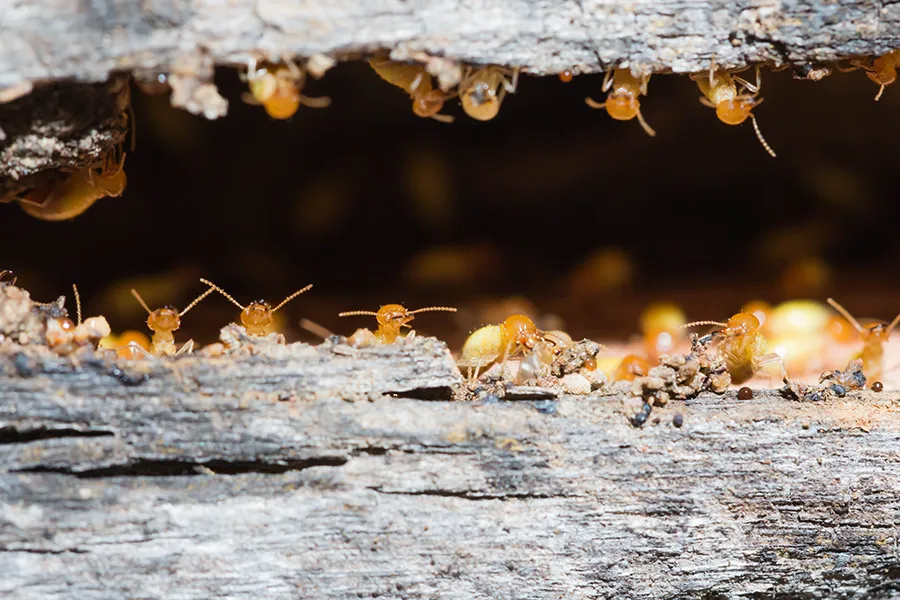
In Georgia, termite season lasts all year. There are different termite species to watch out for depending on the season.
Key Takeaways:
- In Georgia, the soil rarely freezes deep enough, so termite colonies feed 365 days a year.
- Different termite species are bigger threats at different times of the year.
- The most dangerous time for swarming is the first warm, sunny day (70°F+) immediately following a rainstorm.
- Termites don’t die in winter; they move deeper into the soil or into heated crawlspace/walls to stay active.
When Are Termites Most Active in Georgia?
Here in Georgia, we have a saying: “Our termite season starts on January 1st and ends on December 31st.”
While it is true that termites are biologically active 365 days a year, there are specific windows when they are most visible. Understanding this calendar is the key to spotting an infestation before it becomes a structural crisis.
Because swarmers are often seen during the spring, many believe spring to be termite season; however, termites feed and reproduce throughout the fall and winter, too. Termites follow a life cycle that allows them to be more or less active through each season, making them a threat to properties year-round.
The Georgia Termite Calendar
In Georgia, different species swarm at different times. Identifying when you see flying termites can tell a professional exactly what is eating your home.
Early Spring (Feb – May): Eastern Subterranean Termites
- The Swarm: Eastern subterranean termites typically fly during the day, often on the first sunny, warm day following a rainstorm.
- The Look: Small, black bodies with translucent wings.
Late Spring / Summer (May – July): Formosan Termites
- The Swarm: These aggressive invaders swarm at night and are highly attracted to lights. You will often find thousands of Formosan termites hovering around porch lights or street lamps.
- The Look: Larger, yellowish-brown bodies.
Say Goodbye to Pest Problems for Good!
Late Summer / Fall (Aug – Nov): Drywood Termites
- The Swarm: Less predictable, but drywood termite swarms usually occur in late summer evenings.
Why Are Termites More Active in Warm Weather?
Termites thrive in warm, humid climates and typically prefer daytime temperatures that are regularly above 70 degrees Fahrenheit. Termites are cold-blooded insects. In northern states, winter forces them into a dormant-like state deep underground. In Georgia, our soil rarely freezes deep enough to stop them.
- The 70°F Trigger: Termites thrive when temperatures hit 70°F. In Georgia, we often hit this temperature in December or February, meaning our colonies rarely take a break.
- The “Rain” Factor: Swarming requires high humidity to prevent the winged alates from drying out. Georgia’s frequent storms provide the perfect atmospheric pressure to trigger these flights.
Are There Fewer Termites in the Winter?
A common misconception is that all termites die off in winter. In reality, they simply seek out wood or soil they can burrow through easily as they look to tunnel deep enough to protect themselves from dropping temperatures.
- When the top inch of soil gets cold, they tunnel six inches deeper where the earth is insulated.
- Or, even worse, they move inside your heated crawlspace or walls, using your home’s central heating to stay active through January and February.
- So although you may not see swarmers or alates between December and February, termites can still actively be chewing through wood and reproducing right under your nose.
Are Termites a Threat During Every Season?
Yes, termites pose a serious risk to homeowners during the entire year, especially in Georgia.
- Spring/Summer: Threat of new colonies establishing via swarms.
- Fall/Winter: Threat of existing colonies feeding on your sub-floor to stay warm.
Because the threat never truly pauses, your protection plan cannot pause either. Staying vigilant means keeping your eyes open for mud tubes in the winter and swarms in the spring, and calling a trusted termite control company when you suspect an infestation.
If you suspect activity in your home, don’t hesitate to call or email us for a professional termite inspection at a time that’s convenient for you.


