Honey Bees in Georgia
Health RiskMedium
Damage RiskMedium
NuisanceMedium
How to Identify Honey Bees
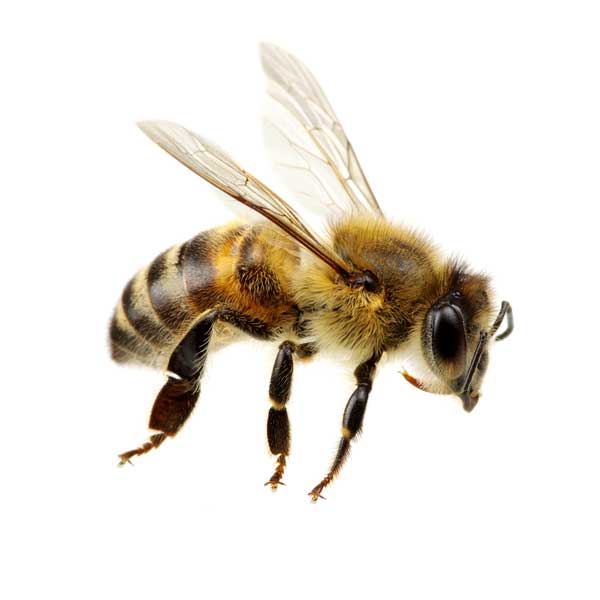
Honey bees are small, fuzzy pollinating insects identified by their golden-brown striped bodies and their common presence around flowers and flowering plants.
- Actual Size 10 to 15 mm
- Characteristics Small, fuzzy pollinators with golden-yellow and black striped bodies.
- Legs 6
- Antennae Yes
- Wings Yes
What Do Honey Bees Do?
These beneficial insects gather nectar and pollen from a wide variety of plants and are often seen flying from flower to flower in sunny outdoor spaces.
- Highly important pollinators that help fertilize many fruits, vegetables, and flowering plants.
- They live in organized colonies made up of a queen, worker bees, and drones.
- They produce honey by collecting nectar and converting it into a stored food source inside the hive.
- Honey bees can sting only once, as their stinger is barbed and typically detaches after use.
Where Do You Find Honey Bees?
Honey bees are often observed in gardens, meadows, and agricultural areas, where they build hives in protected spaces like tree cavities, wall voids, and man-made hives. Common places you’ll find honey bees include:
- Flower gardens and landscaped yards
- Wildflower meadows and open fields
- Agricultural crop fields (such as orchards and vegetable farms)
- Hollow trees in wooded areas
- Beekeeping hives, maintained by beekeepers
- Parks and green spaces with flowering plants
- Clover-rich lawns and roadside vegetation
- Urban gardens and rooftop gardens with blooming plants
What Should I Do If I Have Honey Bees in Georgia?
Honey bees are generally beneficial insects, but they can become more noticeable when nesting in protected spaces such as trees or structures near residential areas. If honey bee activity is a concern, the following steps are recommended:
- Avoid disturbing or attempting to remove an active hive on your own.
- Keep children and pets away from the area where bees are active.
- Reduce outdoor food or sugary drink exposure that may attract additional bee activity.
- Seal gaps or entry points in nearby structures once bees are no longer active in that area.
- Contact a local beekeeper if relocation of the hive is possible.
- Contact a professional pest control service if the hive is in a high-traffic or risky area.
Top 5 FAQs About Honey Bees in Georgia
Have questions about honey bees? Review our FAQ section below. For further support, contact us by phone or email.
Why are honey bees important?
They are essential pollinators that help many crops and wild plants reproduce, supporting ecosystems and food production.
How dangerous are honey bees, and can they cause allergic reactions?
For most people, honey bees are not dangerous, but stings can cause pain and swelling. In some individuals, bee stings may trigger severe allergic reactions that require immediate medical attention.
When are honey bees most active?
They are most active during warm months when flowers are blooming, and food sources are abundant.
How do honey bees make honey?
They collect nectar from flowers, then convert and store it in honeycomb cells inside the hive.
What should I do if I find a honey bee hive near my home?
If a hive is located in a high-traffic or concerning area, it’s best to contact professional pest control or a licensed beekeeper for proper evaluation and removal options.