Huntsman Spiders in Georgia
Health RiskLow
Damage RiskNo Risk
NuisanceMedium
How to Identify Huntsman Spiders
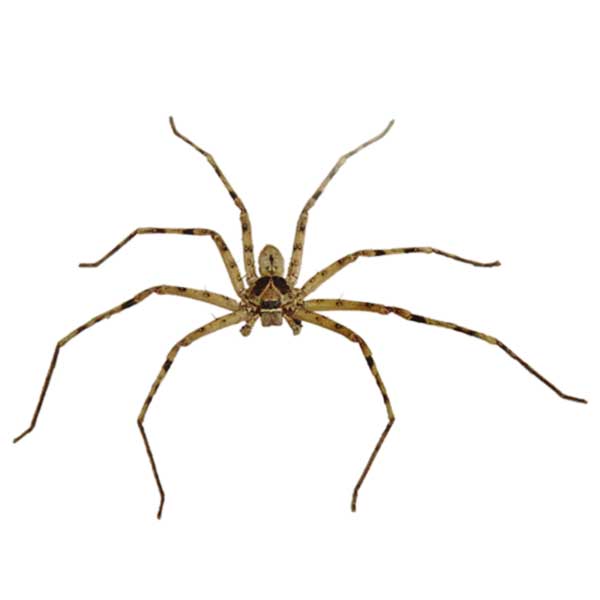
With their mottled brown or gray bodies and long, crab-like legs, huntsman spiders are often found in low-traffic areas of homes and structures where they stay hidden and still.
- Actual Size 3 to 6 inch leg span
- Characteristics Large, brown to gray spider with a flattened, broad body and long, laterally extended legs.
- Legs 8
- Antennae No
- Wings No
What Do Huntsman Spiders Do?
Huntsman spiders in homes and buildings typically hunt rather than build webs, using quick movement to catch flies, mosquitoes, and other insects.
- They are active hunters that use speed and stealth to catch insects like cockroaches, flies, and moths.
- Their bodies are typically flattened, which helps them hide in tight spaces such as under bark or behind objects.
- Females often guard their egg sacs and may show defensive behavior if disturbed.
- Despite their large size, huntsman spiders are not considered dangerous to humans in most cases.
Where Do You Find Huntsman Spiders?
Since huntsman spiders favor low-activity, protected areas, they are commonly found around homes in garages, attics, and secluded interior spaces, including:
- Behind bark on trees and large outdoor shrubs
- Under rocks and flat stones in gardens or yards
- Inside garages and storage sheds
- Along ceilings and walls inside homes
- Behind furniture, picture frames, and stored boxes
- In attics and upper storage spaces
- Around door frames, window edges, and wall cracks
- Inside outdoor structures like carports, barns, and woodpiles
What Should I Do If I Have Huntsman Spiders in Georgia?
Huntsman spiders often move into sheltered areas where food sources like insects are available, allowing them to show up in multiple parts of a structure. If activity becomes a problem, the following steps may help:
- Declutter garages, basements, and storage areas to reduce potential hiding places for spiders.
- Seal gaps, cracks, and entry points around doors, windows, and foundations to prevent access.
- Clear away outdoor debris, stacked wood, and stored items close to the home’s exterior.
- Trim back vegetation near walls, windows, and entryways to limit spider access routes.
- Increase lighting and airflow in dark, unused, or low-traffic areas of the home.
- Contact a professional pest control service if huntsman spider activity continues or becomes difficult to manage.
Top 5 FAQs About Huntsman Spiders in Georgia
Questions about huntsman spiders? Check the FAQ section below, and feel free to contact us by phone or email if you need more support.
Do huntsman spiders build webs?
No. Huntsman spiders do not rely on webs to catch prey. They are active hunters that chase down insects.
What do huntsman spiders eat?
They feed on insects such as cockroaches, flies, moths, and other small arthropods.
Why do huntsman spiders come inside homes?
They may enter homes in search of shelter, warmth, or prey insects, especially during extreme weather conditions.
Can huntsman spiders bite?
Yes, but bites are rare and usually occur only if the spider is threatened or handled. The effects are typically mild and temporary.
How can I reduce huntsman spiders around my home?
You can reduce clutter, seal entry points, limit insect activity, and remove outdoor debris. Professional pest control can help if activity becomes persistent.