Jumping Spiders in Georgia
Health RiskLow
Damage RiskNo Risk
NuisanceLow
How to Identify Jumping Spiders
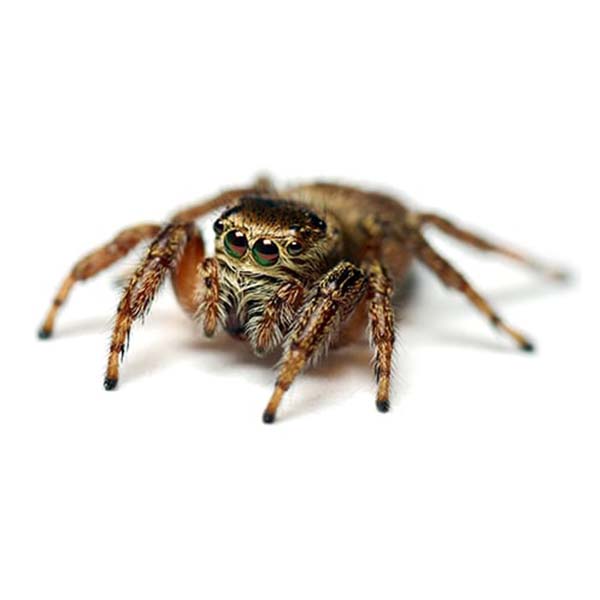
With their compact, fuzzy bodies and large forward-facing eyes, jumping spiders are commonly found on walls, windowsills, and other sunny areas where they actively hunt for insects.
- Actual Size Leg span that can reach approximately ½ to 1 inch
- Characteristics Small, compact spiders with fuzzy bodies, excellent eyesight, and a variety of colors including brown, gray, black, and tan.
- Legs 8
- Antennae No
- Wings No
What Do Jumping Spiders Do?
Unlike many spiders that rely on webs, jumping spiders actively search for prey, using their quick movements and impressive jumping ability to catch insects around homes and structures.
- They have excellent eyesight and use their vision to find prey and avoid danger.
- They are active hunters that chase and capture insects rather than build webs.
- Jumping spiders can leap several times their body length to catch prey or escape threats.
- Their large, forward-facing eyes help them judge distances and track movement.
- They help control insect populations by feeding on flies, mosquitoes, and other small pests.
Where Do You Find Jumping Spiders?
Since jumping spiders are active hunters that often explore areas with insect activity, they can commonly be found around homes on walls, windowsills, gardens, and outdoor structures, including:
- Gardens and flower beds where insects are plentiful
- Window sills and around windows where they can hunt small insects
- Walls and ceilings inside homes and buildings
- Fences, decks, and outdoor structures
- Trees, shrubs, and other vegetation
- Patios, porches, and exterior walls of homes
- Garages, sheds, and storage areas
- Under rocks, leaves, and other sheltered outdoor locations
What Should I Do If I Have Jumping Spiders in Georgia?
Jumping spiders commonly explore homes, gardens, and structures while searching for food and shelter. If you are noticing more jumping spiders than usual, the following steps may help manage the issue:
- Seal cracks, gaps, and openings around windows, doors, foundations, and utility entry points to help prevent them from entering your home.
- Keep windows, doors, and screens in good condition to limit access points for spiders and other insects.
- Remove clutter around garages, sheds, patios, and storage areas where spiders may find shelter.
- Trim vegetation away from your home’s exterior to reduce hiding places and areas where insects may gather.
- Contact a professional pest control company if spider activity becomes widespread or continues despite your prevention efforts.
Top 5 FAQs About Jumping Spiders in Georgia
Questions about jumping spiders? Check the FAQ section below, and feel free to contact us by phone or email if you need more support.
Are jumping spiders dangerous?
No, jumping spiders are harmless to humans. They are not aggressive and rarely bite, making them a low-risk spider commonly found around homes.
Why are they called jumping spiders?
Jumping spiders get their name from their ability to leap several times their body length while hunting prey or escaping potential threats.
What do jumping spiders eat?
They feed on small insects and other spiders, including flies, mosquitoes, gnats, and other pests they encounter while hunting.
Can jumping spiders get inside homes?
Yes, jumping spiders may enter homes through small openings while searching for food, shelter, or suitable areas to hunt. Common entry points include:
• Gaps and cracks around doors, windows, and foundations
• Open doors and windows
• Damaged or loose window screens
• Utility openings and exterior gaps
• Spaces around siding, vents, and other exterior features
• Gaps and cracks around doors, windows, and foundations
• Open doors and windows
• Damaged or loose window screens
• Utility openings and exterior gaps
• Spaces around siding, vents, and other exterior features
How can I prevent jumping spiders around my home?
Reducing insect activity, sealing entry points, removing clutter, and keeping areas around your home clean can help limit spider activity.