
Six Signs That Reveal a Rodent Problem
Serving Atlanta Metro | Columbus | Augusta | Savannah

Protecting your Georgia home from a rodent infestation starts with knowing the signs. Mice and rats are quiet, nighttime explorers that navigate walls and crawl spaces in search of
food. They are skilled at staying hidden, but their activity often leaves behind clear evidence. They may avoid detection, but they leave clues behind. If you recognize any of these signs, it’s worth checking for rodents.
Six signs that could indicate a rodent problem. Click to jump to any section:
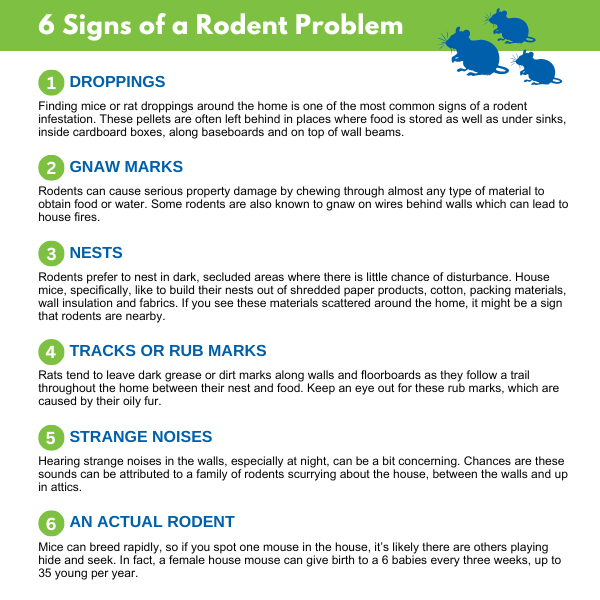
What Are the Signs and Clues of a Rodent Problem?
Rodents often leave quiet but telling clues long before they’re spotted. From faint scratching inside walls to small chew marks on furniture, these signs can reveal a hidden infestation. Catching these early hints can help you prevent a much larger problem. Watch for the following indicators that rodents may be nearby:
Droppings
This is often the first and most reliable clue that rodents are nearby. The size and shape of droppings can help you determine whether you’re dealing with rats or mice. Here’s how to identify each type:
- Rat Droppings: Larger than those of mice, rat droppings measure about 1/2 to 3/4 inch and have rounded or blunt ends, resembling small beans or olive pits. Fresh droppings are dark and glossy, while older ones turn gray, become dusty, and crumble easily when touched.
- Mouse Droppings: These small droppings are about 1/8 to 1/4 inch long and shaped like grains of rice with pointed ends. Since a single mouse can produce 50 to 80 droppings per day, they are often found scattered in cupboards, drawers, or along baseboards where mice travel.
Inspect out-of-sight areas such as behind appliances, under sinks, inside cabinets, and near baseboards for signs of droppings or gnawing.
Gnaw Marks
Rodents must chew constantly because their front teeth never stop growing. This chewing can lead to structural damage and safety concerns. Look for the following signs of gnawing:
- Rats: Produce deep, rough gouges from their larger teeth, capable of chewing through wood, plastic, and even soft metals such as aluminum. Their damage tends to be more extensive than that caused by mice.
- Mice: Create small, fine gnaw marks that resemble tiny scratches, often found on soft wood, cardboard, or insulation. They chew to reach food sources or create nesting areas.
Check corners of walls, inside cabinets, food packaging, and along electrical wires. Chewed wires are a clear sign of rodent activity and a serious fire hazard.
Nests and Nesting Material
Rodents gather and shred soft materials they find around your home to build nests. While the nests are often hidden, evidence of their work can be easier to detect. Here are some common clues to watch for:
- Brown Rat Nests: Brown rats shred available materials to create nests, lining burrows they dig in basements, crawl spaces, or along the foundation of a home.
- Roof Rat Nests: Skilled climbers, roof rats construct their nests high in attics or ceiling voids where they remain safe and out of sight.
- Mice Nests: Mice build small, carefully shredded nests that resemble loose balls of fluff. These nests are often hidden behind appliances, inside cabinets, within wall voids, or tucked in the corner of seldom-used drawers.
Watch for small piles of shredded materials like paper, fabric, insulation, or plant matter tucked away in quiet areas.
Tracks and Rub Marks
Rodents often follow the same routes repeatedly, creating well-worn “highways” marked by dark, greasy paths. These marks stand out against cleaner surfaces. Look for these indicators of rodent activity:
- Tracks: In dusty or rarely used areas of your home, you may find footprints or tail marks. Sprinkling a thin layer of flour or cornstarch along a suspected route can help reveal fresh tracks the next day.
- Rub Marks: As rodents move along walls and baseboards, the oil and dirt from their fur leave dark, greasy smudges. The heavier the marks, the more traffic those areas receive.
Although subtle, these signs are telling. Recognizing rub marks or tracks early can give you an advantage in stopping a rodent infestation before it grows.
Strange Noises
Rodents tend to be active after dark, so nighttime is when their sounds are most noticeable. Their movements can create recognizable noises. Below is a list of common sounds to listen for:
- Gnawing: Chewing noises are produced when rodents gnaw on materials such as wood, wiring, or insulation.
- Squeaking: High-pitched sounds that may signal communication between rodents or distress.
- Scurrying: Rapid, shuffled noises that typically occur beneath floors or behind walls.
- Scratching: Soft, quick sounds often coming from inside walls or ceilings as rodents move about.
Listen for unfamiliar sounds in the attic or kitchen after nightfall, as rodents often frequent these parts of the home.
Actual Rodents
Rodents can remain hidden until their presence becomes unmistakable. Knowing which type you’re dealing with is key to solving the problem. Here are some common rodents found in Georgia homes:
- Deer Mice: Typically found in heavily wooded areas, deer mice have distinctive bi-colored fur and large eyes. They can carry diseases, making them a health concern in certain environments.
- House Mice: House mice, the most common local variety, are small and can adapt to many environments. They often nest inside walls, cabinets, or cluttered areas where they find shelter.
- Norway Rats: Also known as brown rats, these rodents are larger and more robust than mice. They prefer burrowing in basements, crawl spaces, or along foundations and are powerful chewers capable of causing serious damage.
- Roof Rats: Slender and agile climbers, roof rats often build nests in attics, ceiling voids, or trees. They are larger than mice and excel at navigating high spaces.
Spotting even a single rodent indoors usually signals a larger infestation. It’s best to call a professional rodent exterminator right away.
See Rodent Signs? Contact Active Pest Control Today
Noticing signs of rodents is a clear indication that they may be living and breeding in your Georgia home. We know this can be stressful, but it also gives us the opportunity to act quickly to protect your property. Detecting the problem early increases the chances of stopping the infestation before it spreads, saving you time, money, and unnecessary damage.
We’re here to help! Active Pest Control will inspect your property thoroughly and create a tailored plan to address your situation. Our team will walk you through each step so you can feel confident that the problem will be handled efficiently and effectively.
Reach out to the rodent control experts at Active Pest Control now for information and a no-cost estimate.
Back to Rodent Exterminators, Control & Removal


