
Key Takeaways:
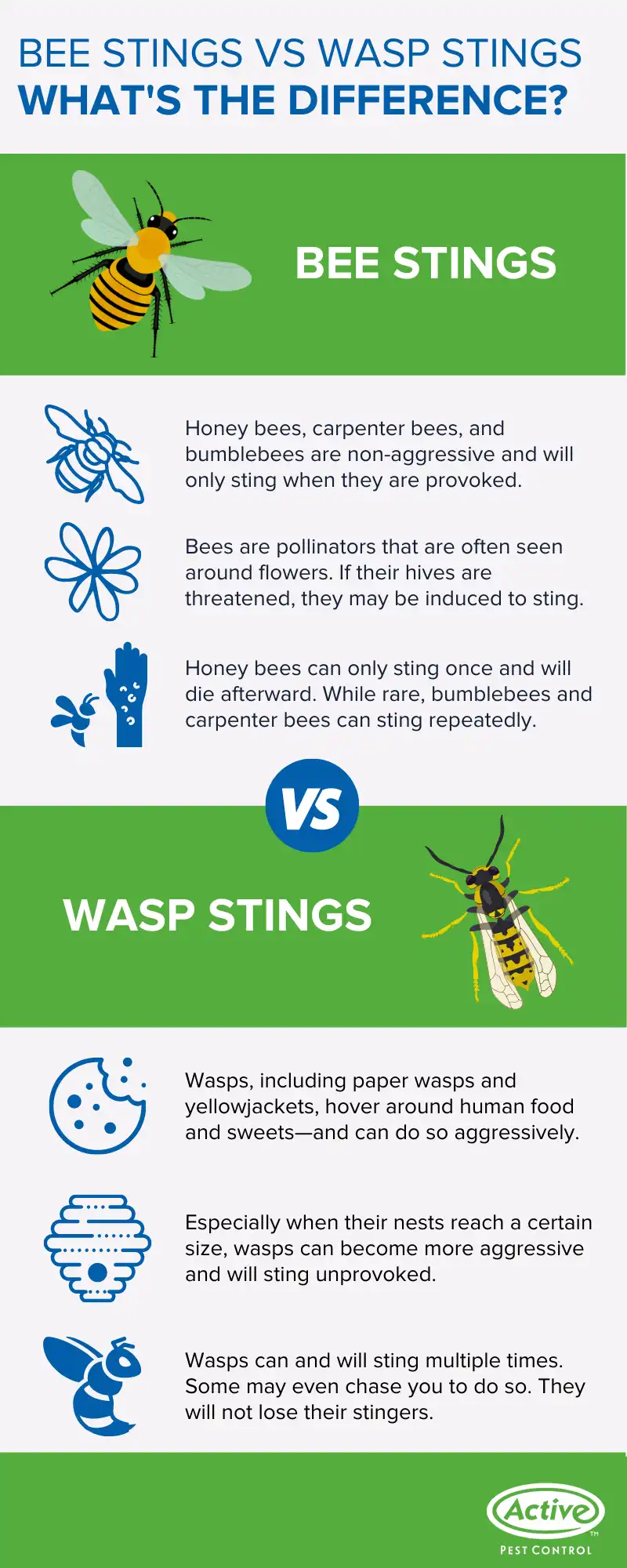
- Wasps are more aggressive and can sting repeatedly, whereas honey bees sting once and die.
- Bee venom is chemically distinct from wasp venom and carries a higher risk for severe allergic reactions.
- Pain levels and behavior vary significantly by species, with paper wasps being notably more painful than honey bees or yellowjackets.
- Professional removal of nests is the safest way to prevent multiple stings and localized infestations.
What’s the Difference Between a Bee Sting and a Wasp Sting?
Here in Georgia, we deal with a lot of stinging insects like bees, wasps, and, of course, hornets and yellowjackets. In the summer especially, you may get stung. It’s a calculated risk you take when you spend time outdoors.
But what exactly stung you – was it a bee or a wasp? Many people refer to any type of sting as a “bee sting”, but the truth is, while the reactions can be similar, the nature of bee stings vs wasp stings are different.
So, let’s dive in and discuss the differences between bee stings and wasp stings.
Did I Get Stung By a Wasp or a Bee?
You’re much more likely to get stung by a wasp (note that hornets and yellowjackets are also types of wasps) than a bee. Bee stings do happen, but most bees prefer to mind their own business than chase you down.
Bees:
- In general, bees are not aggressive and thus unlikely to sting unless directly provoked.
- Honey bees lose their stinger when they sting, causing them to die shortly afterward.
Wasps:
- Wasp stings are known to be more painful than bee stings. This is due in part to the fact that wasps are capable of stinging repeatedly—often in the same spot.
- Wasps are more aggressive and will sting at will, especially when they are provoked or when their nest is threatened.
Reactions to Bee and Wasp Stings – Is There a Difference?
While the behavior of the bee or wasp and the chemical makeup of its venom are different, the bottom line is… the stings feel pretty similar. If you’ve been stung once by a bee or a wasp, here’s what you’re most likely to experience:
- A sharp, stinging pain at the site of the bite.
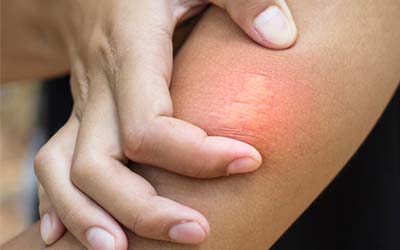
- Swollen, red bumps wherever a bite occurred.
- Itchiness and irritation.
- A numb feeling at the site of the bite.
- Serious reactions can happen. An anaphylactic reaction to a bee sting can start within minutes or up to twelve hours after the incident. If you start to break out in hives or have trouble breathing, go to a doctor immediately. The situation can rapidly get worse.
Say Goodbye to Pest Problems for Good!
Are You More Likely to Get an Allergic Reaction from a Bee Sting or a Wasp Sting?
The risk is about the same. And most people don’t realize this, but being allergic to bee stings doesn’t necessarily mean you’re also allergic to wasp stings – and vice versa. The chemical compositions of each venom are distinct from each other.
Wasps sting people more often than bees, but bee venom actually carries a higher risk of a system whole-body allergic reaction. Think of it this way: if you took 100 people allergic to bees and 100 people allergic to wasps and each was stung exactly once, the bee-allergic group would likely have more severe reactions.
Yellowjackets are the species that cause the most emergency room visits because they sting most often.
Which Hurts More – Wasp Sting or Bee Sting?
The pain you’ll experience when you’re stung by either a bee or a wasp will be about the same – in many cases.
- Bee stings hurt because their barbed stinger tears at your skin and the bee’s venom is highly chemically complex, leaving a lingering pain.
- Wasp stings administer a high level of venom, but the pain may go away sooner because it’s not as chemically complex. Wasps also frequently administer more than one sting at the same time.
There’s a way of measuring the pain level called the Schmidt Sting Pain Index, created by entomologist Justin Schmidt, who allowed stinging insects of all types to sting him so he could document the experience. (Now that’s giving your body to science).
In his findings, both bees’ and yellowjackets’ stings rated as a 2 on the 1 to 4 scale. However, paper wasps have a more painful sting (rated a 3) and tarantula hawks and warrior wasps (which, fortunately, are not common here) have blindingly painful stings rated at a 4.
What Should You Do If You Get Stung?
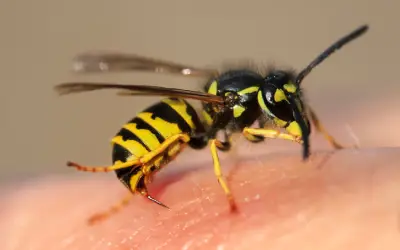 If you happen to get stung, the two most important steps are identifying what stung you and monitoring your overall condition (especially your breathing). If you experience difficulty breathing, swelling in the tongue or throat, dizziness, or heart racing, seek immediate medical attention.
- Move to safety: Get away from the area immediately. If it was a wasp or a nest disturbance, they may have marked you with pheromones that signal others to attack.
- Remove the stinger (Bees only): If there is a stinger left in the skin, scrape it out using a credit card, dull knife, or your fingernail. Do not use tweezers or your fingers to “pinch” it, as this can squeeze more venom into you.
- Wash the area: Use soap and water to clean the site. This helps prevent infection and removes any lingering “alarm pheromones” that might attract more insects.
- Apply a cold compress: Use ice or a cold pack (10 minutes on, 10 minutes off) to reduce swelling and numb the pain.
- Elevate: If you were stung on an arm or leg, keep that limb raised to help minimize swelling.
- Treat the symptoms: For pain: Take Ibuprofen or Acetaminophen. For itching/swelling: Use an antihistamine (like Benadryl) or apply a hydrocortisone cream/calamine lotion.
- Monitor for Anaphylaxis: Watch for the next 30–60 minutes. If you experience difficulty breathing, swelling of the throat/tongue, dizziness, or a rapid pulse, call 911 immediately.
Bee and Wasp Stings – At a Glance
| Species | Temperament | Persistence | The Stinger | Pain Level |
| Bumblebee | Passive: Stings only when physically crushed or if the nest is stepped on. | None: Will not pursue; remains focused on foraging. | Smooth stinger; can sting multiple times but rarely does. | 2.0: Sharp, localized pinch with a brief duration. Minimal throbbing or swelling. |
| Honeybee | Moderate: Defensive within ~3 feet of the hive entrance. | Localized: Will follow for 20–50 feet to drive threats away from the colony. | Barbed stinger; detaches and pumps venom autonomously for up to 60 seconds. | 2.0: Sharp initial prick followed by deep, acidic heat and intense, rhythmic throbbing. |
| Yellowjacket | Hyper-Aggressive: Triggered by vibrations (mowers) or proximity up to 20 feet from ground nests. | Extreme: Known to follow targets for over 100 yards; high persistence. | Smooth stinger; capable of injecting multiple doses in a single encounter. | 2.0: “Dirty” burning sensation. High-frequency stinging often leads to cumulative pain. |
| Paper Wasp | High Alert: Aggressive within 5–10 feet of their open-comb nests. | Short Range: Tactical strikes; rarely pursues more than 20 feet from the nest. | Smooth stinger; delivers potent venom designed for immediate incapacitation. | 3.0: Intense, caustic, and blistering. Pain is immediate and feels chemically “hot.” |
| Bald-Faced Hornet | Proactive: Highly defensive of aerial nests; strikes before a threat makes contact. | High: Pursues aggressively; specifically targets the face and eyes. | Can sting repeatedly or spray venom toward eyes to cause temporary blindness. | 2.0: Heavy, thumping pain. Sensation feels deep-seated and “thick” rather than surface-level. |
| European Hornet | Shy: Avoids conflict; usually only stings if physically trapped or nest is struck. | Low: Minimal chase instinct; prefers to retreat into the nest or fly away. | Bulk Dose: Large reservoir; delivers a significantly higher volume of venom per puncture. | 2.0: High impact pain. Sensation of a deep puncture due to the size and length of the stinger. |
Wasp or Bee Sting Reactions
There are a number of symptoms associated with bee and wasp stings. Usually, the reactions to a sting by either of these pests are largely the same. After being stung, it’s important to remove the stinger (if it was lodged) and immediately clean the area with antibiotics. Some of the common reactions to a bee sting vs wasp sting include:
- A sharp, stinging pain at the site of the bite.
- Swollen, red bumps wherever a bite occurred.
- Itchiness and irritation.
- A numb feeling at the site of the bite.
More serious reactions can happen, especially if someone is allergic to bees or wasps. Anaphylactic reaction to a bee sting can start within two hours of the incident and rapidly get worse. Immediately get to a doctor if you start to break out in hives or have trouble breathing.
Call Us for Bee and Wasp Control in Georgia
Bees and wasps are a normal part of our environment. In fact, they play an essential role in pollinating our flowers and foliage! That said, stings are a common occurrence in the spring and summer. If stinging insects build a nest on or near your property, contact our local bee control and wasp control experts to deal with the problem.
Trying to get rid of them yourself can leave you vulnerable to being stung repeatedly. Contact the team at Active Pest Control today!
Back to Wasp & Hornet Control


