
How Do You Prevent Roaches in Your Home?
Serving Atlanta Metro | Columbus | Augusta | Savannah
 Cockroaches: just the word alone is likely to send someone running. But here’s the thing about roach infestations – you should face them head-on. If you run away, the problem is likely to get worse.
In this article, we’re going to talk about ways to make your home as inhospitable to roaches as possible – so it’s as hospitable as possible for you. This will go a long way toward roach prevention – and preventing a few roaches from turning into a widespread infestation.
The first step is determining what’s attracting roaches into your home in the first place – along with figuring out how they’re able to thrive.
What Attracts Cockroaches?
Cockroaches are resilient pests and are attracted to environments for three main reasons: food, moisture, and warm shelter. If they can find access to these resources in your home, they will want to stick around.
Food
This is the first and most important thing that attracts roaches. Roaches are highly motivated by food, and when they find somewhere that has abundant food resources, they tend to stick around. So, what do cockroaches eat?
Cockroaches are scavengers that will eat almost anything. They love human food sources such as crumbs, grease, and leftover food. They also enjoy pet food left out overnight or dropped to the floor. And they don’t need much. Small particles of food, like crumbs under appliances or residues on a counter, are often enough to sustain them.
In environments where food resources are scarce, cockroaches will also start to eat non-food items like soap and binding glue from books. They will also become cannibalistic, eating other members of their own colony. This makes it extremely difficult to eliminate all food resources that roaches might find appealing from your home.
- Seal Food Airtight: Store all pantry items, pet food, and leftovers in hard plastic or glass containers with airtight lids.
- Wipe Counters Nightly: Clean all kitchen surfaces, tables, and stovetops daily to remove grease, crumbs, and spills.
- Empty Trash Daily: Use a garbage can with a tight-fitting lid, empty it every night, and regularly wash the inside of the bin.
- Wash Dishes Immediately: Never leave dirty dishes, pots, or utensils in the sink overnight.
- Sweep and Vacuum Regularly: Clean floors daily, paying special attention to areas under appliances and behind furniture.
- Limit Eating Areas: Restrict food consumption to the kitchen or dining room to contain crumbs to one zone.
- Manage Pet Bowls: Pick up pet food bowls at night and clean up any spilled kibble immediately.
Deep Clean Appliances: Periodically clean behind and underneath the refrigerator, stove, and toaster where grease and crumbs accumulate.
Moisture
Cockroaches need water to survive, so they are naturally drawn to areas of your home with excess moisture. This includes kitchens, bathrooms, basements, and areas with leaky pipes or standing water.
Moisture provides cockroaches with the water they need and creates ideal conditions for breeding and laying eggs.
- Fix All Leaks: Repair dripping faucets, leaking pipes, and running toilets immediately.
- Dry Sinks Nightly: Wipe down kitchen and bathroom sinks with a dry cloth before going to bed.
- Empty Appliance Trays: Regularly drain and clean the evaporation trays under refrigerators and air conditioners.
- Hang Wet Towels: Hang up bath mats, towels, and dishcloths so they dry quickly; never leave them damp on the floor.
- Dry the Shower: Wipe down shower walls and tubs after use, or use a squeegee to eliminate standing water.
- Control Humidity: Use dehumidifiers or exhaust fans in damp areas like basements, crawlspaces, and bathrooms.
- Manage Pet Water: Empty and dry pet water bowls at night, then refill them in the morning.
Check Indoor Plants: Avoid overwatering houseplants and empty any standing water left in their drainage saucers.
Warm Shelter
Cockroaches prefer to stay out of sight, hiding in small, dark places during the day and emerging to forage for food at night. Common hiding spots include cracks, crevices, baseboards, and behind appliances. Any clutter around your home can also provide ideal harborage for cockroaches.
In order to prevent roaches’ access to warm shelter in your house, start by asking yourself, “How do roaches get inside in the first place?” and work backwards from there.
How Do Cockroaches Enter Homes?
Cockroaches are resourceful creatures that can find multiple ways to enter your home, but there are two main ways: wandering in from outside and hitching a ride via a purchased item or delivery.
Understanding these vulnerabilities can help you secure your home against these pests.
How to Stop Cockroaches from Entering from Outside
Most cockroaches live outside and wander inside searching for food and water. Once inside, they realize, hey, this is a pretty good place to shelter and stay warm – maybe I’ll stick around for a while.
They typically enter through cracks and crevices in your structure or through pipe or utility entrances. Here are some ways to stop them:
- Seal Cracks and Crevices: Use silicone caulk to fill gaps around baseboards, trim, moldings, and wall joints.
- Gap-Check Utilities: Seal openings around pipes, electrical wires, and vents where they enter walls or floors.
- Install Door Sweeps: Fit tight sweeps on exterior doors and fill gaps around window frames to block entry points.
- De-Clutter Cardboard: Discard cardboard boxes and paper bags immediately; use plastic bins for long-term storage instead.
- Pull Appliances Out: Vacuum dust and lint from the compressor coils behind your fridge and freezer to reduce attractive warmth.
- Seal Outlets and Switches: Install foam gaskets behind electrical outlet and light switch plates on shared walls.
- Inspect Electronics: Keep warmth-emitting devices like gaming consoles, routers, and cable boxes out of dark, enclosed cabinets.
- Keep Mulch Away: Maintain a barrier of gravel or bare dirt between your home’s foundation and yard mulch or dead leaves.
- Check Your Vents: Roaches in air vents are a common problem in Georgia, and can significantly affect your home’s indoor air quality.
Say Goodbye to Pest Problems for Good!
Fill out the form below and we’ll be in touch!
*During normal business hours. After hours inquiries will be returned the next business day.
How to Stop Them from Hitching a Ride into Your Home
This is the most common way that indoor-only roaches like the German cockroach get inside. Unfortunately, you can’t always stop this from happening. You can check items carefully before you bring them into your house, but this isn’t always 100% effective.
Your best bet is to try to deprive them of food and water resources, so your home is a poor environment for infestations to grow.
What Type of Cockroach Do I Have?
Georgia is home to several types of cockroaches, each with unique characteristics. Identifying the type of roach in your home is the first step in developing an effective treatment plan.
American Cockroach

The American cockroach is one of the largest roaches found in Georgia, typically measuring between 1.5 and 2 inches. It is reddish-brown, with a distinctive yellowish figure-eight pattern on the back of its head. These roaches prefer warm, moist basements, crawl spaces, and drains.
- Size: Very large (1.5” to 2” long).
- Color: Reddish-brown.
- Markings: A distinct yellowish band or figure-eight pattern directly behind the head.
- Behavior: Capable of short, clumsy flights; thrives in dark, damp environments.
How they get inside: Walk through sewer lines, climb up drains, or slip under gaps in exterior doors and basements.
Best ways to prevent them: Pour water down seldom-used drains, install tight door sweeps, and keep crawlspaces dry.
Australian Cockroaches
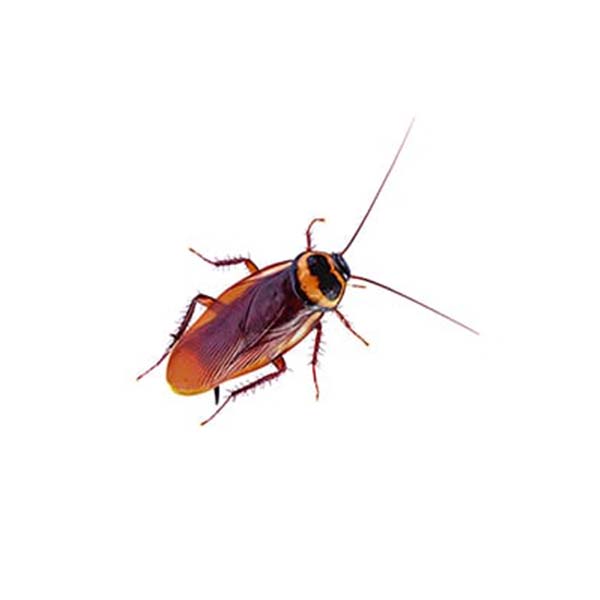
Australian cockroaches, often confused with American cockroaches, are 1.5 inches long and have yellow markings on their thorax and wings. They prefer warm, humid environments like greenhouses and gardens but may enter homes seeking food and moisture, especially during cooler months or when their outdoor habitats are disturbed.
- Size: Medium-large (approximately 1.25” long).
- Color: Reddish-brown to dark brown.
- Markings: Resembles the American roach but features a bright, distinct yellow streak on the outer edge of each wing base.
- Behavior: Prefers outdoor subtropical habitats, greenhouses, and heavy vegetation.
How they get inside: Wander indoors from subtropical outdoor habitats, greenhouses, or potted plants brought inside.
Best ways to prevent them: Keep mulch and woodpiles away from the home foundation, and inspect outdoor potted plants before bringing them indoors.
German Cockroaches
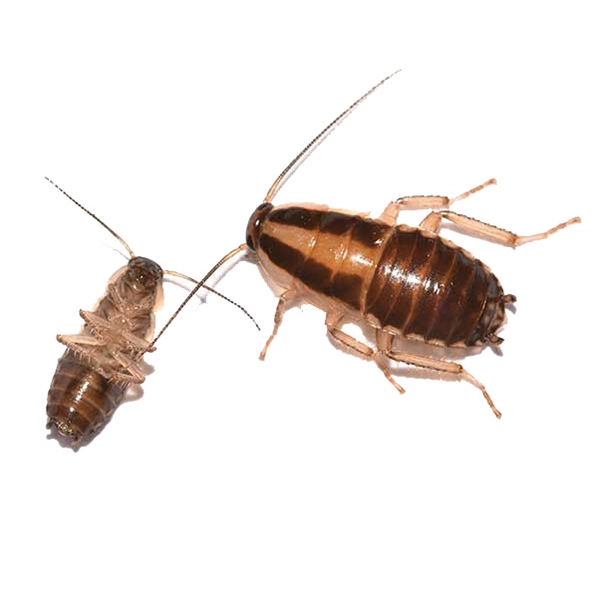
German cockroaches are much smaller than American roaches, usually only about 0.5 inches long. They are light brown with two dark, parallel stripes running down their backs. German roaches are notorious for infesting kitchens and bathrooms due to their attraction to food sources and moisture. They reproduce rapidly, making them a particularly challenging pest to eliminate.
- Size: Relatively small (½” to ⅝” long).
- Color: Light brown to tan.
- Markings: Two distinct, dark parallel stripes running from the head to the base of the wings.
- Behavior: Strictly an indoor pest; prefers warm, humid areas like kitchens and bathrooms.
How they get inside: Hitchhike inside cardboard boxes, grocery bags, secondhand appliances, or furniture.
Best ways to prevent them: Maintain strict kitchen sanitation, eliminate crumbs, and deeply inspect any used items before bringing them indoors.
Brown-Banded Cockroach
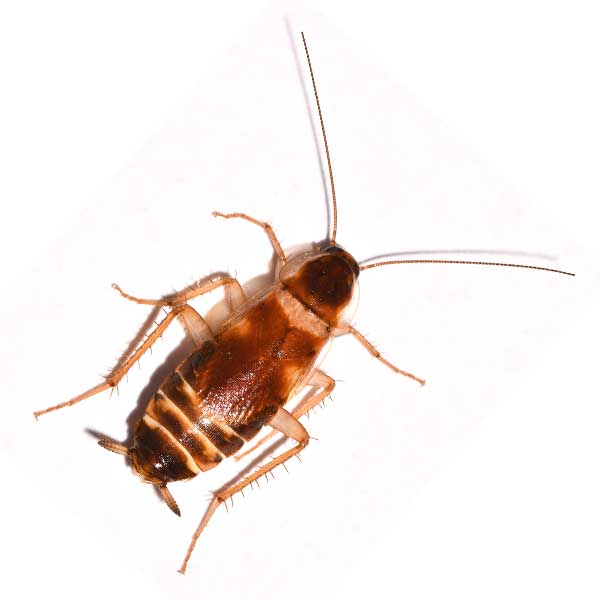
As their name suggests, brown-banded cockroaches have distinctive light brown bands across their wings. They are smaller than American roaches, about the same size as German roaches, and tend to prefer drier areas of your home, such as bedrooms and living rooms. They are often found hiding in higher locations, like shelves and cabinets.
- Size: Very small (½” long).
- Color: Light brown.
- Markings: Two prominent light yellow-brown bands across the wings and abdomen.
- Behavior: Prefers high, dry locations and is often found in ceilings, closets, and upper cabinets rather than kitchens.
How they get inside: Transported inside furniture, electronics, and storage boxes moving from an infested structure.
Best ways to prevent them: Reduce indoor clutter, inspect high shelves/closets, and check electronics or appliances before moving them.
Oriental Cockroach
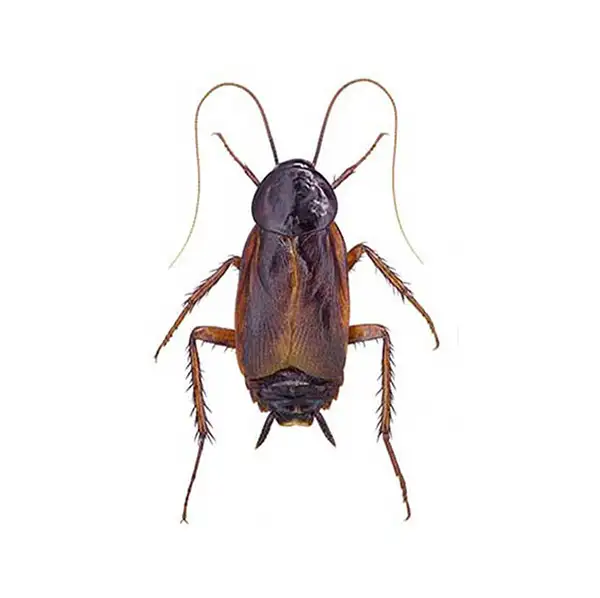
Oriental cockroaches are dark brown or black and are often mistaken for beetles due to their shiny appearance. They are about 1 inch long and prefer cooler, damp environments, making them common in basements, around pipes, and under sinks.
- Size: Medium-large (approximately 1” long).
- Color: Shiny dark brown to jet black.
- Markings: No distinct light markings; distinctively oval-shaped and sluggish; wings are non-functional or very short.
- Behavior: Prefers cold, damp subterranean areas like sewers and drains; often called “waterbugs.”
How they get inside: Crawl through foundation cracks, gaps beneath thresholds, or follow plumbing lines from damp subterranean areas.
Best ways to prevent them: Seal perimeter foundation cracks, fix outdoor leaks, and use dehumidifiers in basements.
Smokybrown Cockroach
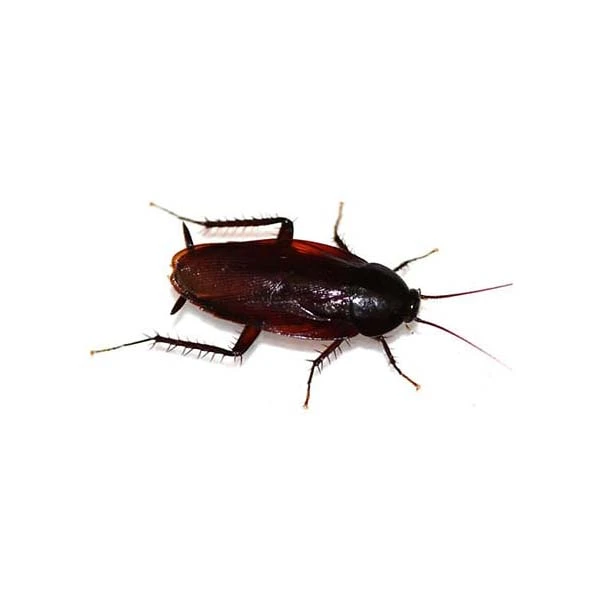
Smokybrown cockroaches are similar in size to American cockroaches but are uniformly dark brown or mahogany. They are strong fliers usually found outdoors, but they will enter homes seeking food, water, and shelter, especially during the warmer months.
- Size: Large (1.25” to 1.5” long).
- Color: Uniformly shiny dark mahogany or blackish-brown.
- Markings: No light markings or contrasting stripes; solid color all over.
- Behavior: Strong fliers with wings extending past the abdomen; primarily an outdoor pest that loves trees and gutters.
Surinam Cockroach
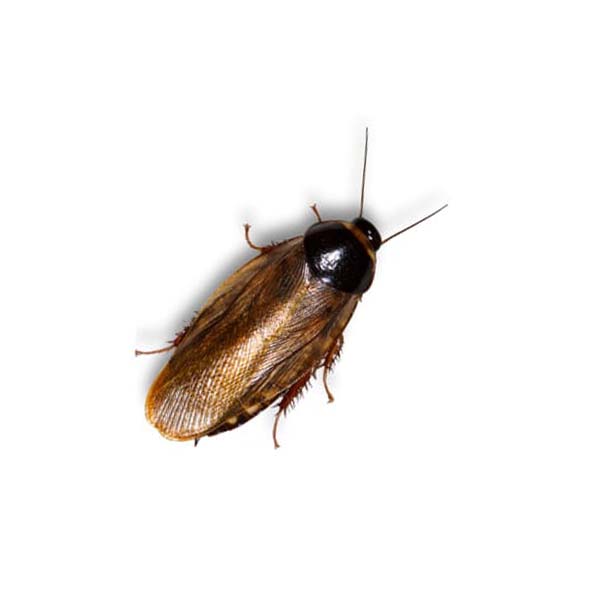
Surinam cockroaches are small, dark brown to black roaches that typically live outdoors in soil, mulch, and gardens. They prefer moist environments and can enter homes by hitching a ride on plants or soil. Often found in basements, greenhouses, and crawl spaces, they thrive in areas with high humidity and organic material.
- Size: Medium-sized (¾” to 1” long).
- Color: Shiny black head with olive-green to dark brown wings.
- Markings: Strong contrast between the glossy black front shell and the duller, greenish-brown wings.
- Behavior: A burrowing, nocturnal species that lives in soil and does not readily fly.
How they get inside: Accidentally brought inside via the soil of tropical potted plants or commercial interior landscaping.
Best ways to prevent them: Inspect plant soil for burrowing insects, avoid overwatering indoor plants, and maintain a gravel barrier around the home perimeter.
Say Goodbye to Cockroach Problems in Georgia!
Cockroaches are worse than simply skin-crawling–they’re carriers of bacteria and pathogens. Because they’ll go anywhere and eat anything, roaches can pick up diseases and pathogens from the darkest places, scattering these dangers throughout your building. A professional cockroach exterminator is your best bet for eliminating these disgusting pests.
The cockroach exterminators at Active Pest Control use Integrated Pest Management to get rid of cockroaches in the most efficient way possible. We’ll work with you to make sure your needs are taken care of, any problems are addressed, and we won’t stop working until the cockroaches are gone for good.
Contact us today to treat and prevent your pest problems!


