Big Brown Bats in Georgia
Health RiskHigh
Damage RiskMedium
NuisanceHigh
How to Identify Big Brown Bats
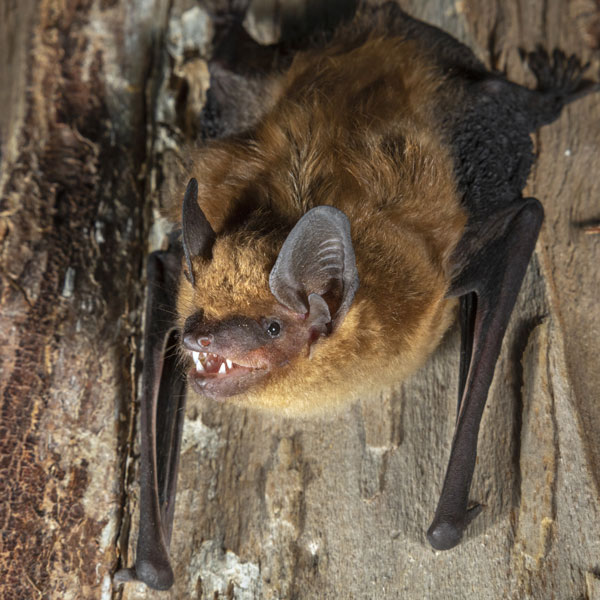
Big brown bats are nocturnal creatures known for their strong, flexible wings, small frames, and ability to use sound waves for navigation.
- Actual Size 4 to 5 inches in body length with a wingspan of about 12 to 16 inches
- Characteristics Medium-sized bats with dense brown fur, broad leathery wings, and rounded, relatively short ears
- Coloration Typically brown with variations of dark brown or reddish tones depending on the individual
- Wings Yes, large flexible wings used for agile nighttime flight and echolocation-assisted navigation
What Do Big Brown Bats Do?
These bats are nocturnal insect-eaters, most active after sunset when they hunt for flying insects. They use echolocation to detect and capture prey in complete darkness.
- Bats are one of the few mammals capable of true sustained flight.
- They commonly roost in dark, quiet areas such as attics, barns, and other sheltered structures.
- A single big brown bat can consume large numbers of insects in one night, helping control pest populations.
- Can carry diseases like other bats such as rabies, which can pose risks to humans and pets if contact occurs.
Where Do You Find Big Brown Bats?
Commonly found in dark, quiet areas that provide shelter during the daytime. Common places you’ll find big brown bats include:
- Attics and upper portions of buildings
- Barns and other agricultural structures
- Hollow trees and tree cavities
- Behind shutters, siding, or wall gaps
- Roof eaves and soffits
- Abandoned buildings or structures
- Rock crevices and cliff faces
- Chimneys and flue openings
- Storage buildings and sheds
What Should I Do If I Have Big Brown Bats in Georgia?
Like some other bat species they can present health concerns, as they may carry diseases such as rabies, and their droppings can be associated with histoplasmosis, which can affect humans and animals. If big brown bats are found in or around your property, the following steps are recommended:
- Identify and seal cracks, vents, and other small openings that big brown bats may use to access attics, walls, or other sheltered areas.
- Avoid disturbing big brown bat colonies, especially during roosting or breeding periods when they are most vulnerable.
- Use safe exclusion methods that allow big brown bats to leave a structure without reentering.
- Professional bat control services are the most effective option for effectively handling big brown bat infestations.
Top 5 FAQs About Big Brown Bats in Georgia
If you have questions about big brown bats, start by reviewing our most frequently asked questions below. If you don’t see what you’re looking for, give us a call or send an email.
Are big brown bats dangerous to humans?
Big brown bats are generally not aggressive, but they can pose health risks if handled. Some individuals may carry diseases such as rabies, so direct contact should always be avoided.
Why are big brown bats in my Georgia home or attic?
Big brown bats often enter structures seeking safe, quiet places to roost. Attics, wall voids, and chimneys can provide warmth, darkness, and shelter similar to their natural habitats.
How do big brown bats get inside a house?
Big brown bats can squeeze through very small openings, sometimes as narrow as half an inch. Common entry points include roof gaps, vents, chimneys, and loose siding.
What should I do if I find a big brown bat in my house?
Avoid touching or attempting to trap the bat. Close off the room if possible and allow it to exit on its own, or contact a bat control professional for safe removal.
How can I prevent big brown bats from returning?
Seal potential entry points once bats have left, install chimney caps or vent screens, and consider professional exclusion services to help prevent re-entry.