Skunks in Georgia
Health RiskMedium
Damage RiskLow
NuisanceMedium
How to Identify Skunks
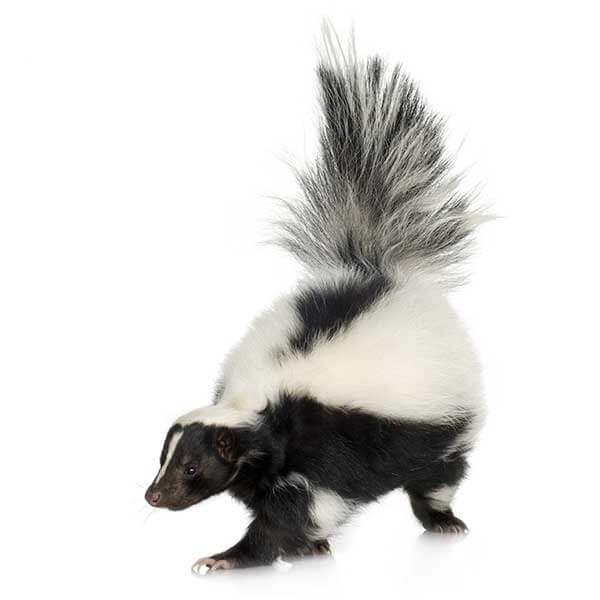
Skunks are slow-moving, ground-dwelling mammals recognized for their bold black-and-white coloring and strong defensive spray, often roaming through fields, brush, and suburban areas in search of food.
- Actual Size 20 to 30 inches in length, including the tail
- Characteristics Medium-sized ground-dwelling mammal known for its slow, deliberate movement and habit of foraging at night for insects, grubs, and small food sources.
- Coloration Black fur with distinctive white stripes running along the back and tail.
What Do Skunks Do?
Skunks are nocturnal mammals that feed on insects, larvae, and plant material, and are commonly found in rural and suburban areas with accessible food sources. Their consistent foraging behavior takes them through lawns, fields, and lightly wooded areas.
- Their most famous defense mechanism is spraying a strong-smelling liquid to deter predators.
- They often dig shallow holes in lawns while searching for insects like beetles and larvae.
- Skunks commonly den under porches, sheds, decks, and in abandoned burrows.
- Despite their reputation, skunks play a beneficial role in controlling insect and rodent populations.
Where Do You Find Skunks?
Skunks are frequently found in rural areas, suburban lawns, and mixed landscapes where they can forage for insects and other food near the ground. Common places you’ll find skunks include:
- Suburban neighborhoods with accessible food sources and shelter
- Rural fields and farmlands
- Residential yards with decks, sheds, and porches
- Parks and green spaces in or near communities
- Brushy field edges and hedgerows
- Areas under buildings, such as crawl spaces and foundations
- Overgrown lots with tall grass and debris
What Should I Do If I Have Skunks in Georgia?
Skunks are commonly found in outdoor areas like residential neighborhoods and wooded properties, where they may den beneath structures, and create concerns for homeowners. If you are experiencing skunk activity on your property, the following steps are recommended:
- Use tightly sealed trash cans or wildlife-resistant bins to prevent access to food waste.
- Eliminate outdoor food sources like pet food, fallen fruit, and bird seed.
- Close off access under decks, sheds, and crawl spaces to stop denning behavior.
- Install buried fencing to help prevent skunks from digging under structures.
- Set up motion-activated lights or sprinklers to deter nighttime skunk activity.
- Inspect yard edges for burrows, especially near foundations and outdoor structures.
- Reach out to wildlife control professionals for safe and effective skunk removal if issues continue.
Top 5 FAQs About Skunks in Georgia
If you have questions about skunks and available removal options, review our FAQ section below. If you have additional questions, contact us by phone or email.
Why do skunks spray?
Skunks spray a strong-smelling liquid as a defense mechanism when they feel threatened or cornered.
Are skunks dangerous to humans?
Skunks are not usually aggressive, but they can carry parasites and diseases such as rabies in rare cases.
How can I tell if I have skunks on my property?
Signs include a strong odor, small dug holes in the yard, overturned trash, and nighttime activity near structures.
How do skunks get under houses?
They often enter through open or damaged areas under decks, sheds, crawl spaces, or foundations.
How can I keep skunks away?
Secure trash, remove food sources, seal entry points, and contact wildlife control for persistent problems.