Gray Squirrels in Georgia
Health RiskLow
Damage RiskMedium
NuisanceHigh
How to Identify Gray Squirrels
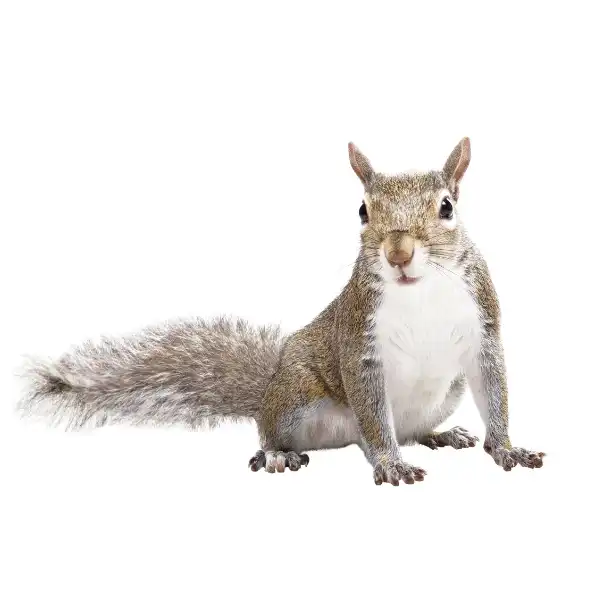
Gray squirrels are medium-sized tree squirrels recognized by their gray fur, bushy tails, and agile movements as they climb trees and forage for food.
- Actual Size 16 to 21 inches in total length, including the tail
- Characteristics Active, tree-dwelling rodents that climb and leap through branches while searching for nuts, seeds, and other food sources in wooded and suburban areas.
- Coloration Gray fur with a lighter underside and a large, bushy tail.
What Do Gray Squirrels Do?
Gray squirrels forage for acorns, nuts, and other plant materials, often gathering in areas with abundant food sources like trees, lawns, and feeders. This activity can lead to frequent sightings in neighborhoods and outdoor spaces.
- They primarily eat nuts, seeds, acorns, fruits, buds, and occasionally insects.
- Store food in scattered caches to help them survive the winter months.
- They build nests called “dreys” out of leaves and twigs in tree branches or use tree cavities.
- Excellent climbers and can jump between trees with impressive agility.
Where Do You Find Gray Squirrels?
Gray squirrels typically inhabit forests, suburban yards, and green spaces where they can forage for acorns and build nests in trees. Common places you’ll find gray squirrels include:
- Hardwood and mixed forests
- Suburban neighborhoods with mature trees
- City and community parks
- College campuses and landscaped grounds
- Residential backyards and gardens
- Cemeteries with large tree cover
- Wooded riverbanks and nature preserves
- Orchards and rural farmland edges
What Should I Do If I Have Gray Squirrels in Georgia?
Gray squirrels often live in residential and outdoor spaces such as trees, roofs, and gardens, where their foraging and nesting habits may result in damage to property and landscaping. When gray squirrels become a concern, the following steps are recommended:
- Seal openings to prevent entering attics, walls, and crawl spaces.
- Trim tree branches that hang close to your roof to reduce easy access to your home.
- Remove outdoor food sources like bird seed, fallen fruit, and unsecured trash.
- Use squirrel-proof feeders or temporarily stop feeding birds in affected areas.
- Install chimney caps and vent covers to block potential nesting sites.
- Clean up nesting materials like leaves and debris around your roof and yard.
- Contact a professional wildlife control service if gray squirrel activity becomes persistent or causes damage.
Top 5 FAQs About Gray Squirrels in Georgia
To learn more about gray squirrels and practical control methods, explore our frequently asked questions below. If you have further concerns, contact us by phone or email.
Can gray squirrels damage homes?
Yes, they can chew on wood, insulation, and wiring if they enter attics or wall spaces.
Why do gray squirrels bury nuts?
They bury nuts and seeds to store food for later use, especially during colder months.
Are gray squirrels dangerous to people?
They are generally not aggressive, but they can carry parasites and may bite if cornered or handled.
Why are gray squirrels attracted to yards?
Bird feeders, gardens, trees, and easy access to food and shelter can attract gray squirrels.
How can gray squirrels be controlled or deterred?
Sealing entry points, trimming tree branches, removing food sources, and using exclusion devices can help manage gray squirrels. Professional wildlife control may be needed for ongoing problems.