Fox Squirrels in Georgia
Health RiskLow
Damage RiskLow
NuisanceLow
How to Identify Fox Squirrels
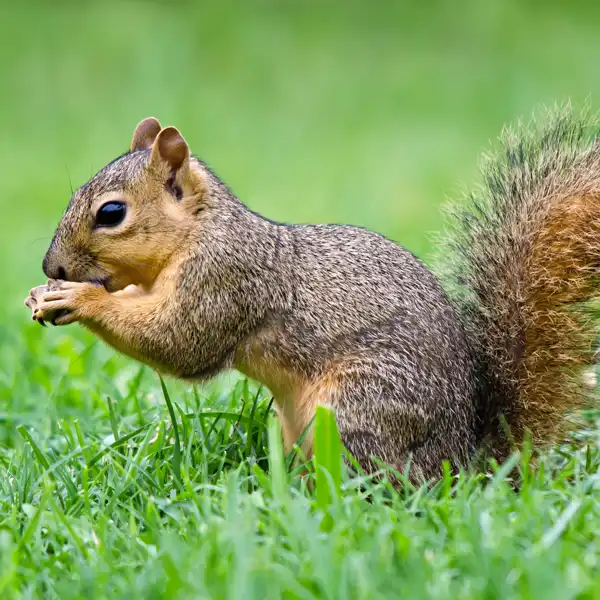
Fox squirrels are large tree squirrels recognized by their reddish-gray fur, long bushy tails, and energetic movement as they gather and store food.
- Actual Size 18 to 27 inches long
- Characteristics Active, tree-dwelling squirrels that climb and leap between branches while foraging for nuts, seeds, and fruits in wooded and residential areas.
- Coloration Gray to reddish-brown fur with a lighter underside and a prominent bushy tail.
What Do Fox Squirrels Do?
Fox squirrels forage actively for nuts, seeds, and plant material, often caching food in shallow holes or tree hollows. This behavior can create minor digging and soil disruption in landscaped areas.
- Highly adaptable and thrive in forests, urban parks, and suburban neighborhoods.
- Build nests called “dreys” in tree branches or use hollow tree cavities for shelter.
- They have strong hind legs that allow them to leap long distances between trees.
- Bury nuts and seeds in the ground to store food for later use.
Where Do You Find Fox Squirrels?
Fox squirrels typically live in areas with forests, suburban settings, and green spaces where they can easily forage for nuts and use trees for shelter. Common places you’ll find fox squirrels include:
- Oak and hardwood forests
- Suburban neighborhoods with mature trees
- City and community parks
- College campuses and green spaces
- Golf courses and landscaped areas
- Wooded riverbanks and nature preserves
- Rural farmlands with tree lines
- Cemeteries and historic wooded grounds
What Should I Do If I Have Fox Squirrels in Georgia?
Fox squirrels commonly inhabit areas with trees, yards, and parklands, where their feeding and nesting habits can sometimes lead to property damage and scattered natural debris. When fox squirrels become a concern, the following steps are recommended:
- Seal openings and reinforce vulnerable areas to prevent squirrels from getting inside attics or walls.
- Trim tree branches that are close to your roof to reduce easy access to your home.
- Remove or secure outdoor food sources like bird feeders, fallen fruit, and unsecured trash.
- Install squirrel-proof barriers or guards on bird feeders and other attractants.
- Clear nesting materials such as leaves, twigs, and debris from around your property.
- Use deterrents like motion-activated lights or sprinklers to discourage activity in problem areas.
- Contact a professional wildlife control service if fox squirrel activity becomes persistent or causes damage.
Top 5 FAQs About Fox Squirrels in Georgia
For questions about fox squirrels and effective ways to manage them, start with our FAQ section below. If you still have additional questions, reach out by phone or email.
Where do fox squirrels nest?
They build nests called “dreys” in tree branches or use hollow tree cavities for shelter and raising young.
Can fox squirrels cause damage?
Yes, they can damage roofs, attics, insulation, and wiring if they enter homes or chew on structures.
Why do fox squirrels bury food?
They bury nuts and seeds to store food for later use, especially during the winter months.
Are fox squirrels aggressive toward people?
They are not typically aggressive but may become bold if they are regularly fed or lose their fear of humans.
How can fox squirrels be controlled or deterred?
Removing food sources, sealing entry points, trimming tree branches near structures, and using exclusion barriers can help manage them. Professional wildlife control may be needed for persistent issues.