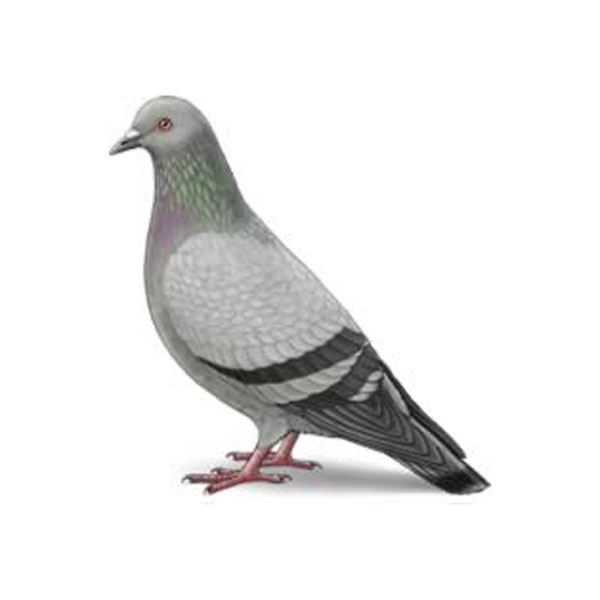
Pigeon

Pigeon information and control - Active Pest Control
Health RiskMedium
Damage RiskMedium
NuisanceHigh

How to Identify Pigeons

Pigeons are social, city-dwelling birds that often appear in groups and are known for their gray coloring, compact shape, and constant cooing calls.
  • Actual Size Around 11 to 14 inches in length with a wingspan of 20 to 26 inches
  • Characteristics Social birds that are frequently found in groups, often feeding on the ground in plazas, rooftops, and open public spaces.
  • Coloration Gray body feathers with shimmering green and purple neck highlights and black wing markings.

What Do Pigeons Do?

Pigeons consume a wide range of foods, including seeds, grains, and leftover food, allowing them to thrive in cities, suburbs, and rural settings. They commonly appear in groups where droppings may accumulate around feeding areas.
  • Primarily feed on seeds, grains, and human food scraps, often foraging on the ground.
  • They are social birds that typically gather in flocks ranging from small groups to large urban roosts.
  • Can recognize human faces and remember locations where they have previously found food.
  • Often nest on building ledges, bridges, rooftops, and other sheltered urban structures.

Where Do You Find Pigeons?

Pigeons commonly inhabit areas with buildings, streets, and open public spaces where food and nesting sites are abundant, thriving in both urban and rural environments year-round. Common places you’ll find pigeons include:
  • City parks and public squares
  • Building rooftops and ledges
  • Bridges and overpasses
  • Parking garages and lots
  • Sidewalks and pedestrian plazas
  • Train stations and bus terminals
  • Waterfronts and piers
  • Agricultural fields and grain storage areas

What Should I Do If I Have Pigeons in Georgia?

Pigeons commonly travel across neighborhoods, commercial areas, and outdoor structures while foraging and roosting, which may create sanitation concerns in some areas. When pigeons become a problem, the following steps are recommended:
  • Remove accessible food sources such as spilled grain, pet food, and unsecured trash that attract pigeons.
  • Install bird spikes or anti-roosting strips on ledges, signs, and rooftops to discourage perching.
  • Use bird netting to block access to balconies, rafters, vents, and other common roosting areas.
  • Seal openings in buildings where pigeons may attempt to nest or enter sheltered spaces.
  • Clean up droppings regularly to reduce sanitation issues and prevent repeat roosting.
  • Limit or stop feeding birds in outdoor areas to avoid encouraging pigeon flocks.
  • Use visual deterrents such as reflective tape, predator decoys, or motion-activated devices.
  • Contact a professional bird control service for persistent roosting or large pigeon infestations.

Top 5 FAQs About Pigeons in Georgia

For questions about pigeons and how to manage them, start with our most frequently asked questions below. If you still need help, reach out by phone or email.
Why are pigeons so common in cities?
Cities provide abundant food sources, nesting sites, and shelter, making them ideal environments for pigeons.
Are pigeons harmful to humans?
They are generally not dangerous, but their droppings can create sanitation concerns and may carry certain pathogens.
Where do pigeons nest?
They build simple nests on ledges, rooftops, bridges, and inside sheltered structures like parking garages and attics.
Why do pigeons gather in large flocks?
Flocking helps them find food more efficiently and provides safety in numbers from predators.
How can pigeons be controlled or deterred?
Removing food sources, installing deterrents like spikes or netting, sealing entry points, and contacting professional bird control can help manage them.

House Sparrow

Sparrow information and control - Active Pest Control
Health RiskMedium
Damage RiskMedium
NuisanceHigh

How to Identify House Sparrows

House sparrows are social birds that commonly gather in small groups and are recognized by their dull brown plumage, short tails, and noisy, chirping vocalizations.
  • Actual Size Typically 5 to 6 inches long with a wingspan of about 8 to 10 inches
  • Characteristics Communal birds that frequently move in small groups and are often found feeding and nesting around buildings and outdoor spaces.
  • Coloration Dull brown and gray feathers, with males featuring a distinctive black bib and chest markings.

What Do House Sparrows Do?

House sparrows feed mainly on seeds, grains, and occasional insects, along with plant material, making them well-suited to both urban and rural habitats. They often form small flocks where some cleanup may be needed near feeders and nesting areas.
  • They are highly social birds that often gather in small to large flocks, especially around food sources and nesting sites.
  • Build their nests in cavities such as rooflines, vents, wall gaps, trees, and dense shrubs.
  • They are not migratory in most regions and tend to stay in the same general area year-round.
  • They are considered an invasive species in many parts of North America, where they can compete with native birds for nesting sites and food.

Where Do You Find House Sparrows?

House sparrows often live in environments with homes, farms, and landscaped areas that provide easy access to food and shelter, thriving in both urban and rural settings year-round. Common places you’ll find house sparrows include:
  • Residential neighborhoods
  • City parks and playgrounds
  • Farms and barns
  • Parking lots and shopping centers
  • Rooftops and building ledges
  • Bus stations and transit areas
  • Gardens and shrub hedges
  • School campuses and sports fields

What Should I Do If I Have House Sparrows in Georgia?

House sparrows often move between homes, gardens, and urban structures while foraging and nesting, which can sometimes lead to minor waste accumulation in specific areas. When house sparrows become a problem, the following steps are recommended:
  • Install bird netting or mesh over vents, openings, and eaves to prevent nesting in structures.
  • Seal gaps and small entry points in buildings where house sparrows may try to nest or roost.
  • Use deterrents like spikes or angled surfaces on ledges, beams, and signs to discourage perching.
  • Avoid feeding birds outdoors, as this can encourage house sparrow populations to increase.
  • Contact a professional bird control service for persistent infestations or nesting inside buildings.

Top 5 FAQs About House Sparrows in Georgia

If you have questions about house sparrows and effective ways to handle them, review our most frequently asked questions below. If you still need assistance, contact us by phone or email.
What do house sparrows eat?
They eat seeds, grains, crumbs, and other food scraps, making them frequent visitors to outdoor feeding areas.
Do house sparrows migrate?
Most house sparrows are non-migratory and stay in the same general area throughout the year.
Where do house sparrows nest?
They nest in cavities such as rooflines, vents, wall gaps, signs, trees, and dense shrubs.
Why are house sparrows considered a nuisance?
They can create messes with droppings, build nests in unwanted places, and compete with native birds for nesting sites.
How can house sparrows be controlled or deterred?
Removing food sources, sealing entry points, using deterrents, and contacting professional bird control can help manage infestations.

European Starling

Starling identification and information - Active Pest Control
Health RiskMedium
Damage RiskMedium
NuisanceHigh

How to Identify European Starlings

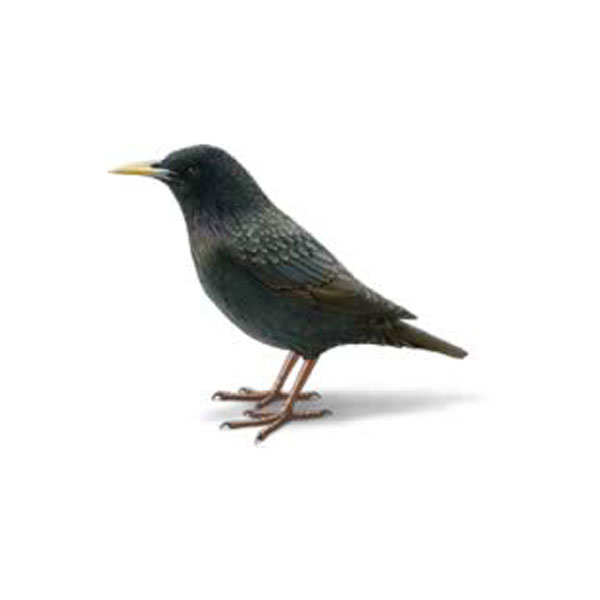
European starlings are highly social birds that travel in large, noisy flocks and are recognized by their dark, glossy feathers with speckled markings and short, pointed bills.
  • Actual Size Typically 7 to 9 inches long with a wingspan of around 12 to 17 inches
  • Characteristics Highly social birds that gather in large, coordinated flocks and are often seen moving together in dense aerial patterns.
  • Coloration Shiny black feathers with metallic green and purple highlights and light spotting across the body.

What Do European Starlings Do?

European starlings eat a wide range of foods such as insects, seeds, and fruit. They tend to congregate in large flocks in parks, fields, and urban environments, where their droppings can contribute to sanitation concerns.
  • Cavity nesters and will build nests in holes in trees, buildings, vents, and other sheltered structures.
  • These birds are highly adaptable and can live in cities, farms, grasslands, and suburban neighborhoods.
  • Large flocks of starlings can create sanitation concerns due to heavy droppings, especially in roosting areas like parks and rooftops.
  • Considered an invasive species in North America, where they can compete with native birds for nesting sites and food resources.

Where Do You Find European Starlings?

European starlings are commonly found in areas with open ground and nearby structures for nesting, particularly in both rural and urban environments during peak seasonal activity. Common places you’ll find European starlings include:
  • City parks
  • Agricultural fields
  • Suburban neighborhoods
  • Parking lots and shopping centers
  • Building rooftops and ledges
  • Bridges and overpasses
  • Farm barns and silos
  • School campuses and sports fields

What Should I Do If I Have European Starlings in Georgia?

Because European starlings travel in large flocks between cities, fields, and buildings, they can create significant waste accumulation that leads to cleanliness and property maintenance concerns. When European starlings become a problem, the following steps are recommended:
  • Remove food sources such as spilled grain, pet food, and unsecured trash to discourage European starlings from gathering in the area.
  • Install deterrents like bird spikes, netting, or angled surfaces to prevent roosting on buildings and ledges.
  • Seal openings in vents, soffits, and structures to block access to common nesting sites.
  • Clean up droppings promptly to reduce sanitation issues and discourage repeat roosting.
  • Trim trees and manage landscaping to reduce sheltered areas where starlings may gather.
  • Contact a professional wildlife or bird control service for safe, humane management of persistent starling infestations.

Top 5 FAQs About European Starlings in Georgia

If you have questions about European starlings and effective ways to handle them, review our most frequently asked questions below. If you still need assistance, contact us by phone or email.
What do European starlings eat?
They eat insects, fruits, seeds, and grains, making them highly adaptable to different environments.
Why are European starlings considered a nuisance?
Large flocks can create heavy droppings, noise, and sanitation issues, especially when they roost in urban areas.
Do European starlings nest in buildings?
Yes, they often nest in cavities such as vents, soffits, rooflines, and other sheltered openings in structures.
Can European starlings cause property damage?
Yes, their nesting habits and droppings can damage buildings, clog vents, and create cleanup and maintenance issues.
When should you seek professional help for European starlings?
Professional bird control is recommended when large flocks are persistent, roosting in structures, or causing ongoing sanitation issues.

American Dog Tick

American dog tick information and control  - Active Pest Control
Health RiskHigh
Damage RiskNo Risk
NuisanceHigh

How to Identify American Dog Ticks

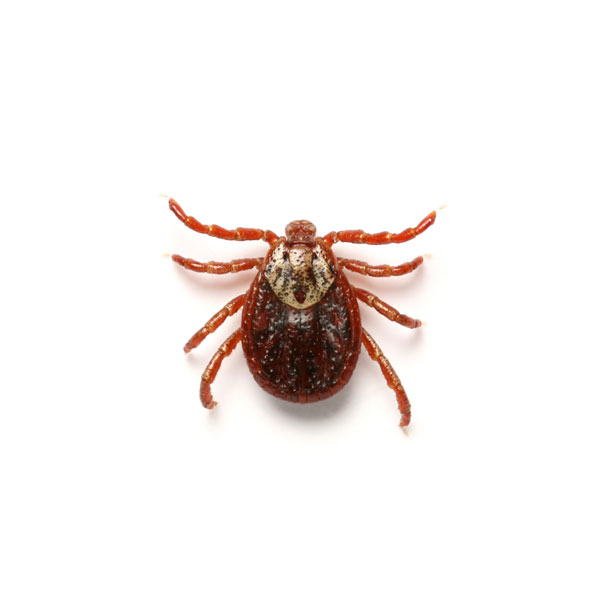
American dog ticks are external parasites with compact, hard bodies and specialized feeding structures that allow them to attach to animals and humans.
  • Actual Size About 5 mm when unfed, but can grow significantly larger after feeding.
  • Characteristics Small external parasites with flattened, oval bodies; American dog ticks are typically brown with lighter markings.
  • Legs 8
  • Antennae No
  • Wings No

What Do American Dog Ticks Do?

American dog ticks feed on the blood of animals and humans, relying on hosts such as dogs, wildlife, and people for survival. They are most active when seeking a host and can be found in outdoor environments, grass, and areas where pets or wildlife pass through.
  • Parasites that live in outdoor environments and attach to hosts such as dogs, wildlife, and humans for feeding.
  • They are most active when searching for a host and are commonly found in grassy areas, wooded spaces, and along animal travel paths.
  • They can cause health concerns, including skin irritation, discomfort, and potential disease transmission to both people and animals.
  • Known for their ability to latch onto hosts while moving through vegetation, where they wait for passing animals or humans.

Where Do You Find American Dog Ticks?

Typically found in areas where hosts are abundant and conditions are warm and humid, both in natural and suburban settings. Common places you’ll find American dog ticks include:
  • On household pets such as dogs and cats
  • Pet bedding and sleeping areas
  • Tall grass and overgrown fields
  • Wooded areas and forest edges
  • Hiking trails and brushy paths
  • Parks and recreational green spaces
  • Areas where deer, rodents, or wildlife are active
  • Pet walking routes and dog parks
  • Campgrounds and outdoor picnic areas

What Should I Do If I Have American Dog Ticks in Georgia?

American dog ticks may become a serious issue as they spread from grassy or wooded outdoor spaces onto people and animals, resulting in irritation and potential health concerns. When dealing with a tick problem, the following steps are strongly recommended:
  • Carefully inspect pets, clothing, and skin after spending time outdoors in grassy or wooded areas.
  • Remove any attached ticks promptly using fine-tipped tweezers, grasping close to the skin and pulling straight out.
  • Clean and disinfect the bite area and wash hands thoroughly after tick removal.
  • Wash clothing, bedding, and pet items in hot water and dry on high heat to kill any hidden ticks.
  • Avoid walking through tall grass and overgrown vegetation where ticks are commonly found.
  • Contact a professional pest control service if tick activity is persistent or widespread.

Top 5 FAQs About American Dog Ticks in Georgia

Questions about American dog ticks? Check our FAQ section below, and if you don’t see your answer, feel free to call or email us.
Where are American dog ticks usually found?
They are commonly found in tall grass, wooded areas, hiking trails, parks, and anywhere wildlife or pets frequently pass through.
Are American dog ticks dangerous?
They can pose health risks because they may transmit diseases and can cause irritation or allergic reactions from their bites.
How do American dog ticks get on people or pets?
They wait in vegetation and attach to a passing host when contact is made with grass, brush, or leaf litter.
Can American dog ticks live inside my home?
They prefer outdoor environments but can be brought inside on pets, clothing, or gear, and may survive temporarily indoors.
When should I call a professional for tick control?
Contact a pest control professional if tick activity is persistent, widespread, or difficult to manage with basic prevention methods.

Flea

Flea information and control - Active Pest Control
Health RiskHigh
Damage RiskNo Risk
NuisanceHigh

How to Identify Fleas

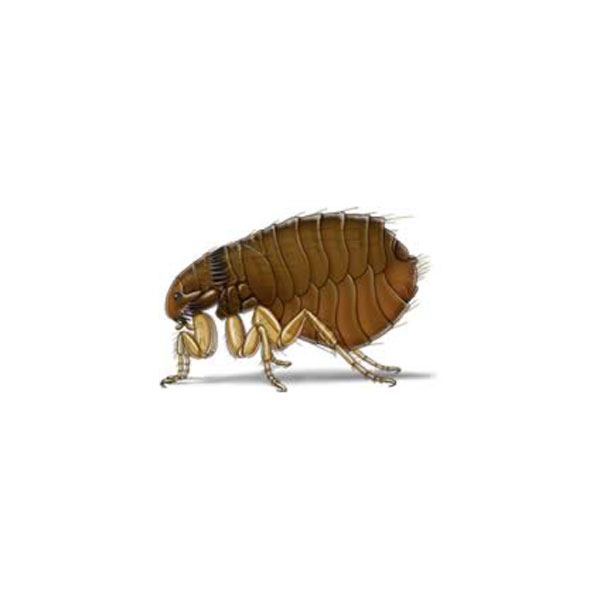
Fleas are tiny parasitic insects that use adapted mouthparts to latch onto hosts and consume blood from both people and animals.
  • Actual Size Typically 1-3 mm (larger when engorged after feeding)
  • Characteristics Small parasitic insects that are reddish-brown to dark brown and highly mobile, with strong hind legs adapted for jumping long distances
  • Legs 6
  • Antennae Yes
  • Wings No

What Do Fleas Do?

Fleas are blood-feeding parasites that depend on hosts such as pets, wildlife, and humans for survival. They are commonly found in indoor environments, pet sleeping areas, and shaded outdoor spaces.
  • Commonly found on pets, in carpets, pet bedding, upholstered furniture, and shaded outdoor areas.
  • Bites can cause itching, irritation, and allergic skin reactions in both people and animals.
  • Pets such as dogs and cats are common flea hosts, but can also feed on wildlife and humans.
  • Can transmit certain diseases and parasites, including tapeworms and bacterial infections, under certain conditions.

Where Do You Find Fleas?

Fleas thrive in areas with frequent animal activity and are often present in homes, carpets, furniture, and outdoor spaces with pets or wildlife. Common places you’ll find fleas include:
  • Pet bedding and sleeping areas
  • Carpets and rugs inside homes
  • Upholstered furniture and couches
  • Cracks and crevices in home flooring
  • Areas where pets frequently rest or play
  • Yards with shaded grass or soil
  • Kennels, animal shelters, and pet care facilities
  • Wildlife nesting areas, such as crawl spaces or attics
  • Blankets, pet carriers, and soft fabrics
  • Homes with untreated pets or recurring wildlife activity

What Should I Do If I Have Fleas in Georgia?

Fleas can become difficult to manage when they are introduced into homes by pets or wildlife and begin spreading throughout indoor areas. If you are facing a flea problem, the following steps are recommended:
  • Treat pets with veterinarian-approved flea prevention or flea control products.
  • Vacuum carpets, rugs, furniture, and pet bedding frequently to remove fleas and eggs.
  • Wash pet bedding, blankets, and fabrics in hot water and dry on high heat.
  • Dispose of vacuum contents immediately after cleaning to prevent fleas from escaping.
  • Maintain your yard by trimming grass and reducing shaded areas where fleas may survive.
  • Check pets regularly for flea activity, especially around the neck, back, and tail areas.
  • Contact a professional pest control service if flea activity persists or spreads throughout the property

Top 5 FAQs About Fleas in Georgia

Need more information about fleas? Review our FAQ section below, and reach out by phone or email if you need additional assistance.
How do fleas get into a home?
Fleas are often brought indoors by pets, wildlife, clothing, or used furniture and fabrics.
Can fleas spread diseases?
Fleas can transmit certain diseases and parasites, including tapeworms and some bacterial infections.
How can I prevent fleas in my home?
Regular pet treatments, vacuuming, washing bedding, and maintaining your yard can help reduce flea activity.
Do fleas only live on pets?
No, fleas may also live in carpets, furniture, bedding, and other indoor or outdoor areas where pets, wildlife, or humans spend time. They can bite humans as well as animals.
When should I contact pest control for fleas?
You should contact a professional pest control service if flea activity is persistent, widespread, or difficult to eliminate.

House Cricket

House cricket - Active Pest Control
Health RiskNo Risk
Damage RiskLow
NuisanceMedium

How to Identify House Crickets

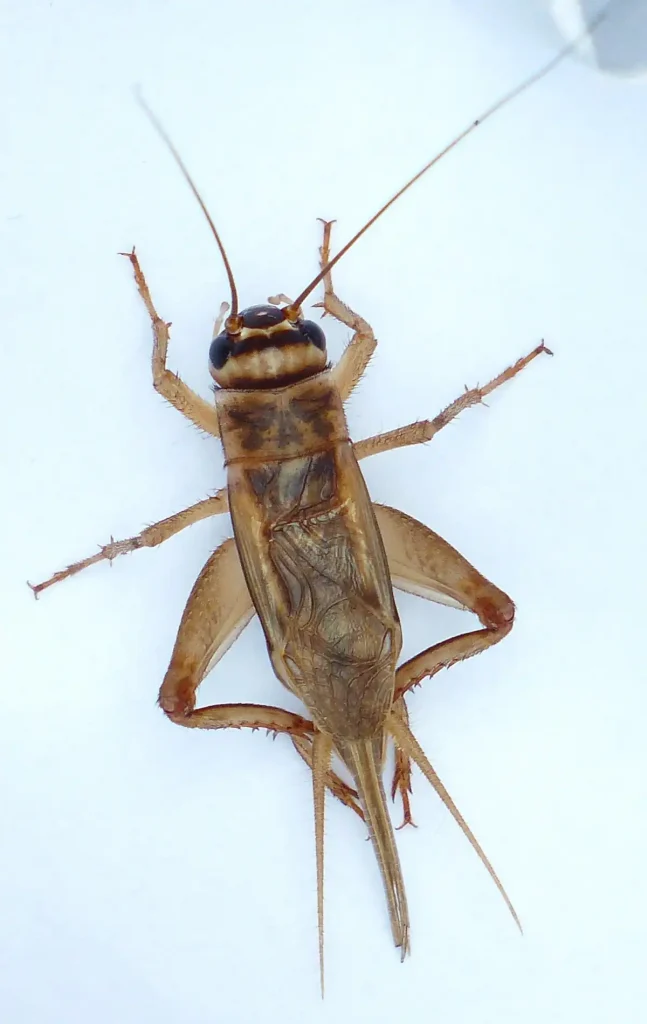
House crickets are recognized by their elongated bodies and prominent antennae, frequently found hiding in moist, sheltered indoor spaces like bathrooms, basements, and under sinks.
  • Actual Size 15 to 25 mm
  • Characteristics Small to medium-sized insects with light brown to dark brown bodies, long hind legs for jumping, and very long antennae.
  • Legs 6
  • Antennae Yes
  • Wings Yes (present in some species)

What Do House Crickets Do?

House crickets prefer low-light conditions and are usually heard at night, staying hidden during the day in warm, undisturbed spaces.
  • They are known for their chirping sound, which is produced by males rubbing their wings together.
  • House crickets are omnivores and feed on organic materials like plant matter, fungi, and occasionally fabric or paper.
  • They often enter homes during seasonal weather changes, especially in search of warmth or shelter.
  • While generally harmless to humans, large numbers indoors can become a noisy and persistent nuisance.

Where Do You Find House Crickets?

House crickets tend to gather in warm, secluded indoor environments, often hiding in tight spaces, corners, and other undisturbed locations. Common places you’ll find house crickets include:
  • Basements
  • Crawl spaces
  • Garages
  • Laundry rooms
  • Bathrooms
  • Under sinks
  • Behind appliances
  • Storage areas and closets

What Should I Do If I Have House Crickets in Georgia?

While house crickets are generally harmless to humans and animals, they can become a bothersome indoor pest due to their noise and activity. If you’re dealing with house crickets, the following actions are recommended:
  • Fix leaks and use dehumidifiers to lower moisture levels in damp areas.
  • Seal openings around doors, windows, pipes, and foundations to block entry.
  • Eliminate clutter and stacks of cardboard that provide hiding spots.
  • Maintain dry, well-cleaned conditions in basements, garages, and crawl spaces.
  • Limit outdoor lighting that can attract crickets at night.
  • Keep firewood and yard debris stored away from the home’s exterior walls.
  • Contact professional pest control if crickets continue to appear or spread throughout the home.

Top 5 FAQs About House Crickets in Georgia

Need information on house crickets? Take a look at our FAQ section below. If you need further support, don’t hesitate to reach out to us by phone or email.
Why do house crickets chirp?
Male house crickets chirp by rubbing their wings together to attract females and establish territory.
Why do house crickets come inside homes?
They often enter homes seeking warmth, moisture, and shelter, especially during extreme weather conditions.
What do house crickets eat?
House crickets are omnivores and feed on plant matter, food crumbs, fungi, and sometimes fabrics or paper.
Do house crickets cause damage to homes?
They do not damage structures, but they may occasionally chew on fabrics, paper, or stored goods.
How do you get rid of house crickets?
Reduce moisture, seal entry points, remove clutter, and use traps. Call professional pest control if infestations persist or worsen.

Earwig

Earwig - Active Pest Control
Health RiskNo Risk
Damage RiskNo Risk
NuisanceMedium

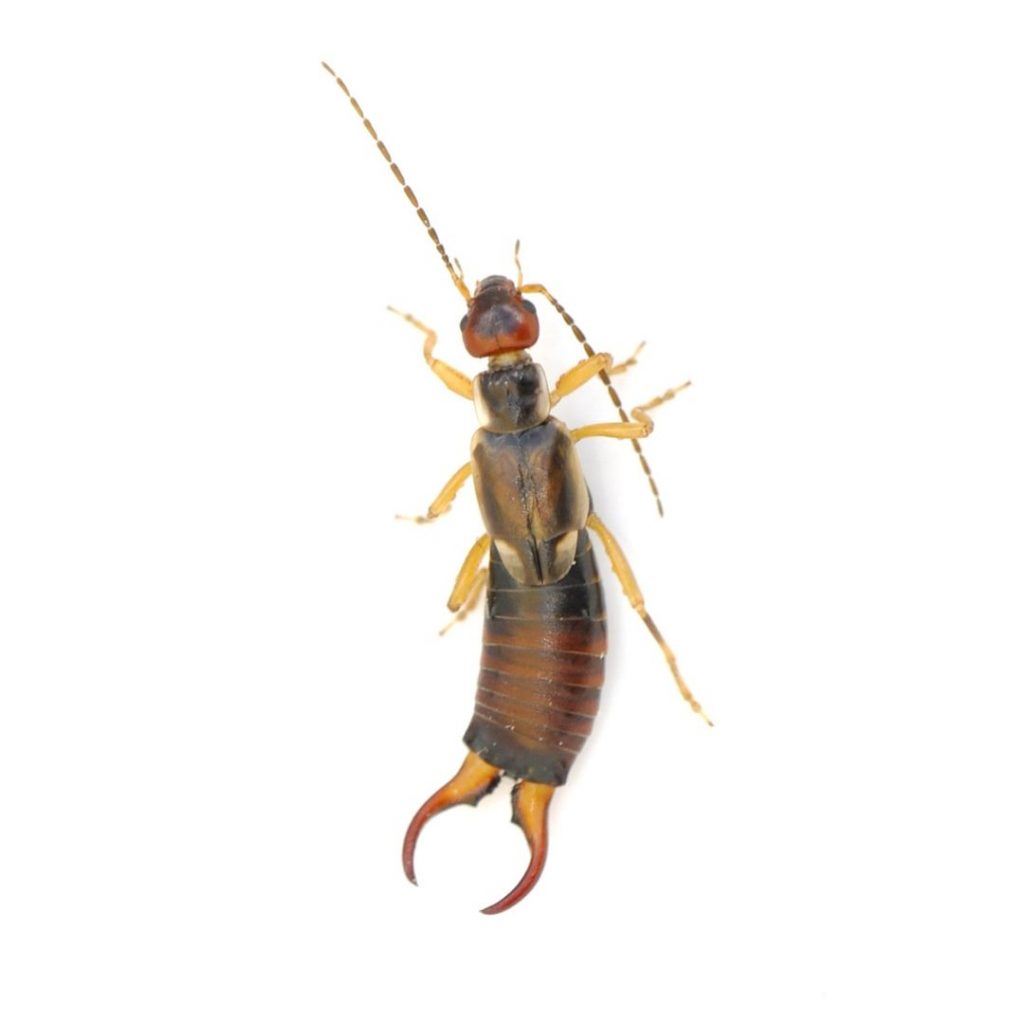
How to Identify Earwigs

Earwigs are recognized by their long, narrow bodies and pincers at the rear, and are commonly seen crawling in moist areas like gardens, crawl spaces, and entry points into the home.
  • Actual Size 5 to 25 mm
  • Characteristics Elongated, dark brown to reddish-brown insects with flat bodies and distinctive pincers (cerci) at the rear.
  • Legs 6
  • Antennae Yes
  • Wings Yes (only present in some species)

What Do Earwigs Do?

Earwigs are nocturnal pests that feed on decaying organic matter and plant material, often remaining hidden during the day in dark, moist spaces around the home.
  • They have a pair of pincers called cerci on their abdomen, which they use for defense, mating, and capturing prey.
  • They are omnivores, feeding on decaying plant matter, fungi, and occasionally small insects or soft plant tissue.
  • Some earwig species have wings and can fly, but they rarely do so and usually prefer to crawl.
  • Earwigs often enter homes during periods of heavy rain or drought while searching for shelter.

Where Do You Find Earwigs?

These insects are often found in dark, humid environments both inside and outside the home, taking refuge in cracks, crevices, and other sheltered locations. Common places you’ll find earwigs include:
  • Under rocks and stones
  • Mulch beds and garden soil
  • Inside damp basements
  • Bathrooms (around sinks and tubs)
  • Crawl spaces
  • Under leaf litter and yard debris
  • Cracks in foundations and walls
  • Around potted plants and planters

What Should I Do If I Have Earwigs in Georgia?

While not considered a health risk to people or pets, they can become a nuisance when they enter homes and gather in damp areas like basements, bathrooms, and kitchens. If you’re dealing with earwigs, the following actions are recommended:
  • Reduce moisture by fixing leaks and improving drainage around the home.
  • Remove leaf litter, mulch buildup, and other yard debris near the foundation.
  • Seal cracks and gaps in doors, windows, and the foundation to prevent entry.
  • Keep bathrooms, basements, and kitchens as dry and clean as possible.
  • Shake out shoes, towels, and clothing that have been stored near the floor or outdoors.
  • Move stored items off the ground and away from damp walls to reduce hiding spots.
  • Contact professional pest control if earwigs are persistent, entering in large numbers, or are difficult to manage on your own.

Top 5 FAQs About Earwigs in Georgia

Got questions about earwigs? Explore our FAQ section below. If you need further help, you can reach us by phone or email.
Do Earwigs Really Crawl Into People's Ears?
Despite their name, earwigs are not known for regularly crawling into people's ears. The belief likely comes from old folklore rather than scientific evidence. While an earwig could accidentally end up in an ear, this is extremely uncommon. Earwigs prefer dark, damp environments outdoors and are more likely to hide under mulch, rocks, leaves, or other sheltered areas than seek out contact with people.
Why do earwigs come inside the house?
Earwigs typically move indoors looking for moisture, shelter, or cooler conditions during hot, dry, or overly wet weather.
What do earwigs eat?
Earwigs are omnivores. They feed on decaying plant matter, insects, fungi, and sometimes tender plants or seedlings.
Where do earwigs hide during the day?
They hide in dark, damp places such as under rocks, mulch, leaf litter, basements, bathrooms, and crawl spaces.
Are earwigs harmful to plants?
Earwigs can sometimes feed on soft plant tissue, seedlings, and flowers, but they are also known to eat other garden pests.
How do you get rid of earwigs?
Reduce moisture, remove debris, seal entry points, and use traps. Call professional pest control if infestations are heavy, recurring, or continue indoors.

House Centipede

House centipede - Active Pest Control
Health RiskLow
Damage RiskNo Risk
NuisanceMedium

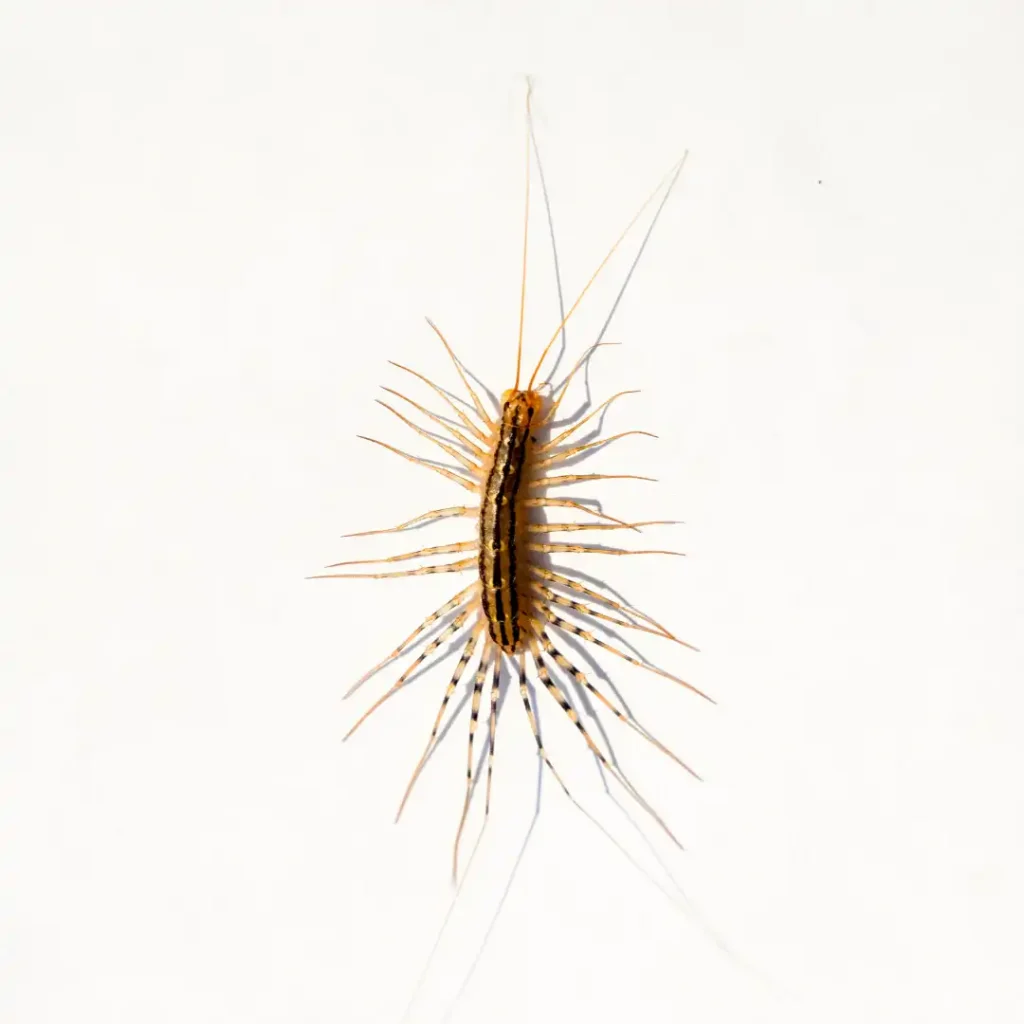
How to Identify House Centipedes

These fast-moving pests are identified by their elongated bodies, long antennae, and many legs, often found in moist indoor spaces such as laundry rooms, basements, and under sinks.
  • Actual Size 25 to 38 mm
  • Characteristics Long, flattened pests with grayish-yellow bodies, dark stripes, and numerous long, delicate legs extending from the sides.
  • Legs 30
  • Antennae Yes
  • Wings No

What Do House Centipedes Do?

House centipedes are nocturnal pests that hunt insects and spiders, often remaining hidden during the day in damp, dark areas around the home.
  • They prefer damp, humid environments like basements, bathrooms, crawl spaces, and laundry rooms.
  • Despite their alarming appearance, house centipedes are generally harmless to humans and rarely bite.
  • They use venom to paralyze and capture small insects and other prey.
  • House centipedes often enter homes while searching for moisture, shelter, and food sources.

Where Do You Find House Centipedes?

House centipedes are often found in dark, damp areas indoors where insects are present, hiding in cracks, corners, and other secluded spaces. Common places you’ll find house centipedes include:
  • Basements
  • Bathrooms
  • Laundry rooms
  • Under sinks
  • Garages
  • Behind storage boxes
  • Cracks and wall voids

What Should I Do If I Have House Centipedes in Georgia?

House centipedes do not typically pose a danger to people or animals, but their fast movements and appearance can make them an unwelcome pest indoors. If you’re dealing with house centipedes, the following actions are recommended:
  • Keep moisture-prone areas, such as basements and bathrooms, dry and well-maintained.
  • Close off cracks, crevices, and small openings around the exterior and interior of the home.
  • Clear away clutter and unnecessary storage that can provide shelter for pests.
  • Avoid storing cardboard boxes directly on floors in humid spaces.
  • Increase airflow in laundry rooms, bathrooms, and other damp environments.
  • Contact professional pest control if activity becomes ongoing or difficult to manage.

Top 5 FAQs About House Centipedes in Georgia

Got questions about house centipedes? Explore our FAQ section below. If you need further help, you can reach us by phone or email.
Are house centipedes dangerous to humans?
No, house centipedes are not considered dangerous. They rarely bite, and if they do, the bite is typically mild and comparable to a small bee sting.
Why do house centipedes come inside homes?
They usually enter homes searching for food, moisture, and shelter, especially in damp environments like basements, bathrooms, and crawl spaces.
Where do house centipedes hide during the day?
They hide in dark, moist, and undisturbed areas such as under sinks, behind baseboards, in drains, basements, and storage areas.
Are house centipedes a sign of a bigger pest problem?
Yes, often. Their presence usually indicates there are other insects in the home since they rely on them for food.
How do you get rid of house centipedes?
Reduce moisture, seal entry points, remove clutter, and control other insects. Call professional pest control if sightings are frequent or moisture and pest issues persist.

Millipede

Millipede - Active Pest Control
Health RiskLow
Damage RiskNo Risk
NuisanceMedium

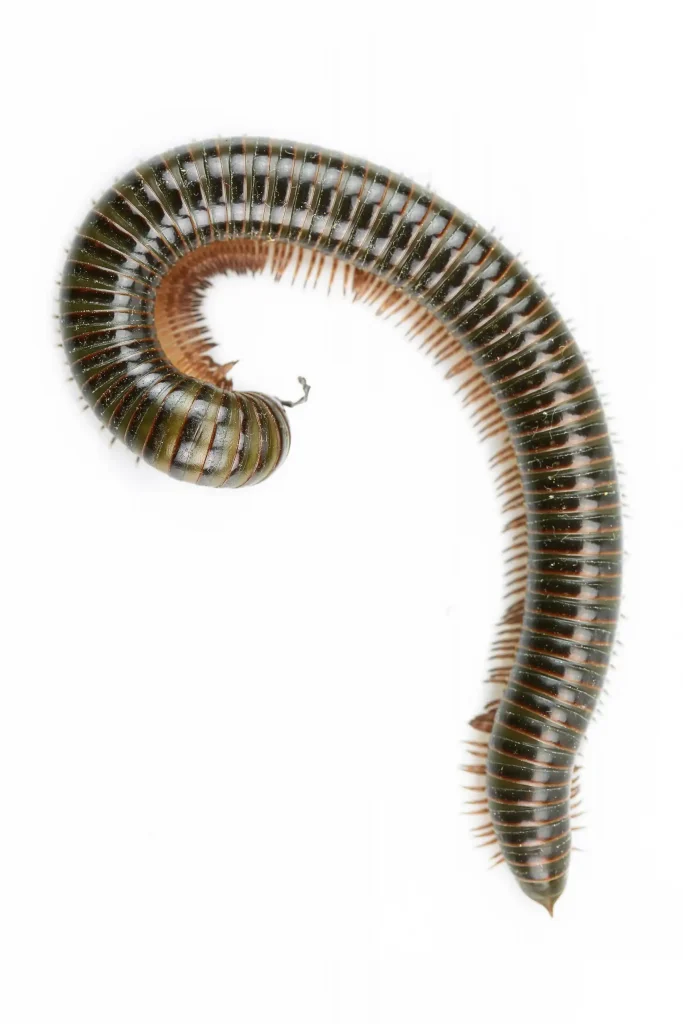
How to Identify Millipedes

These pests are recognized by their elongated, cylindrical bodies with many tiny legs, commonly found in moist, dark areas such as gardens, basements, and under debris.
  • Actual Size 10 to 50 mm
  • Characteristics Long, cylindrical arthropods with dark brown to black segmented bodies and two pairs of legs per body segment; slow-moving and worm-like in appearance.
  • Legs Typically have between 300 and 400 legs
  • Antennae Yes
  • Wings No

What Do Millipedes Do?

Millipedes are most often seen during damp conditions, when they emerge from soil and leaf litter to move slowly across shaded outdoor surfaces.
  • They are slow-moving and typically avoid light, preferring dark, moist environments.
  • Millipedes feed mainly on decaying plant material, helping break down organic matter in soil.
  • When threatened, they curl into a tight spiral to protect their soft undersides.
  • Millipedes often enter homes during periods of heavy rain or drought while searching for stable moisture conditions.

Where Do You Find Millipedes?

These creatures commonly gather in moist, dark areas, moving slowly through mulch, gardens, and other ground-level habitats. Common places you’ll find millipedes include:
  • Damp soil in gardens
  • Leaf litter and fallen leaves
  • Under logs and rocks
  • Mulch beds around landscaping
  • Compost piles
  • Crawl spaces and basements
  • Inside bathrooms, basements, or other damp indoor areas
  • Around foundations after heavy rain

What Should I Do If I Have Millipedes in Georgia?

Millipedes do not pose a health risk, but they may become a nuisance when they gather around homes and move inside during periods of heavy rain. If you’re dealing with millipedes, the following actions are recommended:
  • Reduce excess moisture by fixing leaks and improving drainage around the home.
  • Use dehumidifiers in damp indoor areas like basements and crawl spaces.
  • Seal cracks and gaps around doors, windows, and foundations to block entry.
  • Remove leaf litter, mulch buildup, and yard debris near the home’s exterior.
  • Keep basements, bathrooms, and storage areas clean and dry.
  • Relocate potted plants away from the foundation to reduce hiding spots.
  • Contact professional pest control if millipedes are entering frequently or in large numbers.

Top 5 FAQs About Millipedes in Georgia

Have questions about millipedes? Check out our FAQ section below. If you have additional questions, contact us by phone or email.
Why are millipedes in my house?
Millipedes often enter homes during periods of heavy rain, drought, or extreme moisture changes while searching for stable, damp conditions.
Do millipedes bite or sting?
No, millipedes do not bite or sting people or pets.
Why do millipedes curl up?
When threatened, millipedes curl into a tight spiral to protect themselves from predators.
How can I prevent millipedes indoors?
Reduce moisture, seal entry points, and remove organic debris near your home’s foundation.
When should I call a professional for millipedes?
You should contact pest control if millipedes are entering your home frequently or in large numbers.

Pillbug

Pillbug - Active Pest Control
Health RiskNo Risk
Damage RiskNo Rish
NuisanceLow

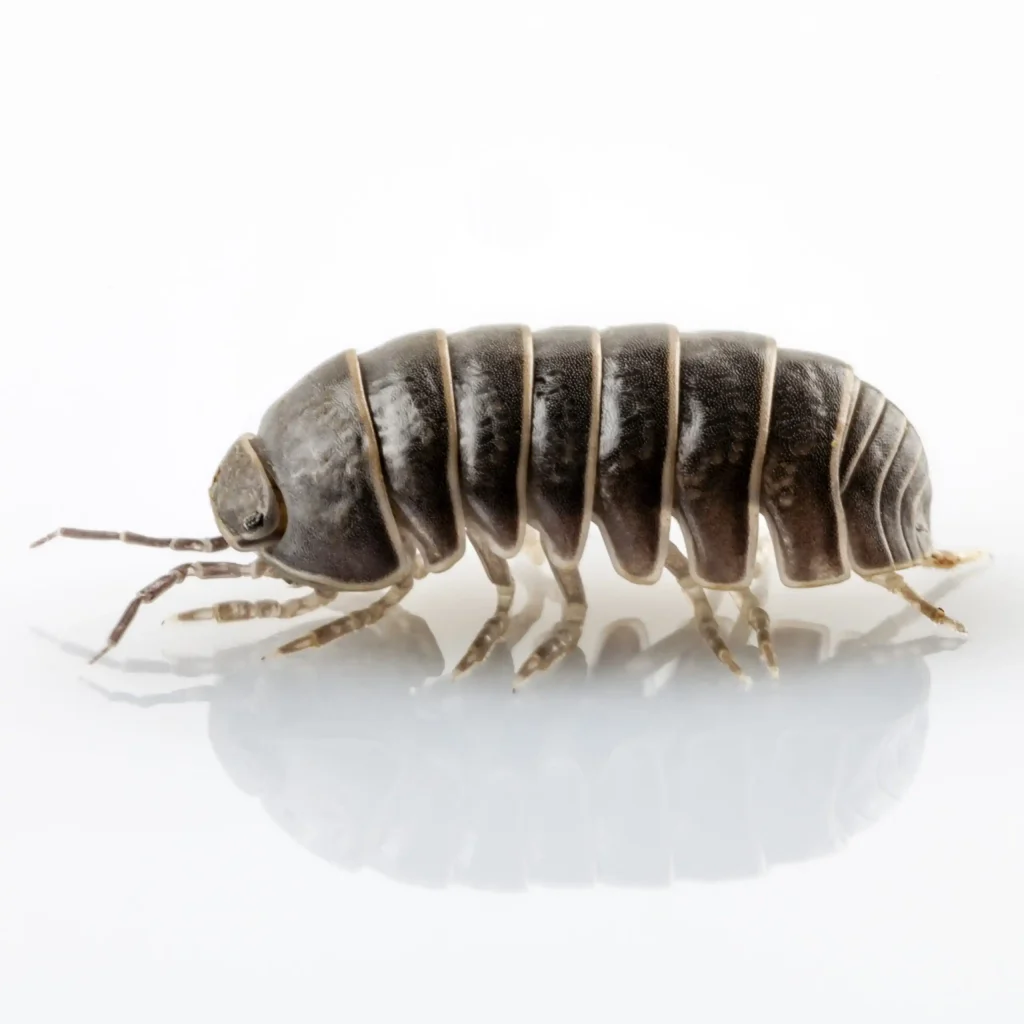
How to Identify Pillbugs

These pests can be identified by their rounded, grayish bodies that curl into a ball when disturbed, often found in damp places like gardens, basements, and under mulch or debris.
  • Actual Size 6 to 18 mm
  • Characteristics Small, oval-shaped crustaceans with gray to dark gray segmented bodies and a hard, armor-like shell.
  • Legs 14
  • Antennae Yes
  • Wings No

What Do Pillbugs Do?

Pillbugs are often seen in damp environments, when they surface from soil and organic debris to move across shaded garden areas.
  • Small crustaceans, not insects, and are more closely related to shrimp and crabs.
  • Pillbugs can roll into a tight ball as a defense mechanism when threatened.
  • They feed mainly on decaying plant material, helping break down organic matter in soil.
  • They often enter homes during periods of heavy rain or excessive moisture while searching for shelter.

Where Do You Find Pillbugs?

These small creatures are often found in damp, shaded environments where they move slowly through soil, leaf litter, and garden debris. Common places you’ll find pillbugs include:
  • Under rocks in gardens
  • In mulch beds and landscaping
  • In damp soil around plants
  • Under logs and fallen wood
  • In leaf litter and compost piles
  • Inside basements or crawl spaces
  • Under potted plants
  • Around foundation edges after rain

What Should I Do If I Have Pillbugs in Georgia?

Pillbugs do not pose a health risk, but they may become a nuisance when they gather around homes and move inside during periods of heavy rain. If you’re experiencing a pillbug issue, consider the following measures:
  • Reduce excess moisture by fixing leaks and improving drainage around the home.
  • Use dehumidifiers in damp indoor areas such as basements and crawl spaces.
  • Seal cracks and gaps around doors, windows, and foundations to block entry.
  • Remove leaf litter, mulch buildup, and decaying organic debris near the home.
  • Keep basements, garages, and storage areas clean, dry, and well-ventilated.
  • Relocate potted plants away from the foundation to reduce hiding spots.
  • Contact professional pest control if pillbugs are entering frequently or in large numbers.

Top 5 FAQs About Pillbugs in Georgia

Looking for answers about pillbugs? Explore our FAQ section below. If you still have questions, reach out to us by phone or email.
Why do pillbugs roll into a ball?
They roll into a tight ball as a defense mechanism to protect themselves from predators and dry conditions.
What do pillbugs eat?
Pillbugs feed mainly on decaying plant material, helping break down organic matter in soil.
Why are pillbugs in my house?
They often enter homes during wet or overly dry conditions while searching for moisture and shelter.
How do I prevent pillbugs indoors?
Reduce moisture, seal entry points, and remove organic debris near your home’s foundation.
When should I call a professional for pillbugs?
Contact professional pest control if pillbugs are entering your home frequently or in large numbers despite prevention efforts.