
Preventing Winter Pests from Entering Your Home

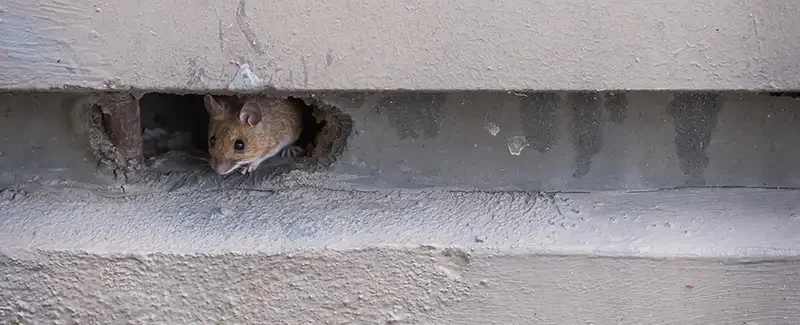
Close-up of a mouse peeking out from a small hole in a concrete wall, illustrating common entry points for pests. Protect your home from unwanted visitors—contact Active Pest Control today!

As the weather gets colder, rodents, spiders, and other pests are drawn indoors, seeking warmth, food, and shelter. Understanding their motives and entry points can help you keep them from entering your home this winter. Taking preventive steps now will save you the hassle of dealing with infestations during the colder months.

Why do Pests Enter Homes in Cold Weather?

During the colder months of autumn and winter, natural food sources for pests become limited, prompting them to seek shelter inside homes. These pests are often drawn to quieter areas of the house, which is why you might hear strange sounds in the attic or basement. Beyond being a nuisance, rodents can spread diseases such as hantavirus and salmonella, cause structural damage through gnawing, and contaminate food with harmful pathogens. As temperatures drop, homes become an ideal refuge, offering warmth, safety, and easy access to food sources.

Which Rodents and Other Pests Might You Find in Your Home?

Rats, mice, and squirrels are typical wintertime pests, but depending on where you live, you might also see cockroaches, spiders, raccoons, possums, or bats looking for a cozy spot indoors. Rodents, in particular, are skilled intruders as mice can fit through openings as small as a pencil’s diameter, and rats can squeeze through any hole that fits their heads. Their climbing abilities allow them to scale pipes, rough walls, and downspouts, so sealing every small gap is crucial to keeping these unwanted guests outside.

How Fast Can Rodents Reproduce

Once inside, even a small number of rodents can lead to a major infestation in no time. Mice and rats reproduce quickly and, with a suitable nesting site, can multiply rapidly. A single pair of rats may lead to more than 1,000 offspring within a year, while female mice can produce up to 10 litters annually, with young reaching maturity in 4-6 weeks. A minor rodent problem can quickly spiral into a much larger issue.

Signs of a Pest Infestation

If you think you may have a pest issue, watch for signs such as droppings, nests, and chew marks, especially in less-visited places like attics, basements, or behind appliances. Scratching in the walls, the pitter-patter of feet, or odd smells from hidden areas could also mean rodents are present. Rodents often cause damage by shredding paper, cardboard, and insulation for nesting, and their chewing can affect wiring and wooden structures, which may compromise your home’s stability. Professional pest control help is recommended as soon as you detect rodent activity.

Winter Pest Prevention Tips for Key Areas in Your Home

As winter approaches, taking proactive steps can help keep pests from invading your home. Here are some essential tips for securing key areas and preventing unwanted guests this season: 

  • Kitchen: Pests are drawn to kitchens for the many food sources available, including crumbs, leftovers, and food left uncovered on counters or in cupboards. Be sure to clean up spills and crumbs, empty the trash daily, and store food in tightly sealed containers to help deter them.
  • Attic: Attics are attractive to rodents because of their warmth and dryness. To keep them out, secure electrical wires, seal entry points by fixing roof damage, and store items in plastic bins rather than cardboard.
  • Garage: To prevent rats, mice, and other pests from entering your garage, seal any gaps that lead to the outside and ensure all house entrances are properly sealed. As with the attic, store items in plastic containers to eliminate food and nesting sources.

Pest Hotspots Outside of Your Home

Pest activity isn’t limited to the inside of your home; the exterior can be a hotspot for pests looking to invade. Here are some key outdoor areas to inspect and protect before pests start seeking shelter this winter: 
  • Garden: Compost is a magnet for pests, so keep it in a container with a secure lid. Additionally, clear any debris or waste from the garden and trim back shrubs or tree branches near the house.
  • Outdoor Bins: Avoid overfilling outdoor bins, as excess waste can attract pests like rats, mice, and flies. Ensure the lids fit tightly to keep pests from entering and breeding in your trash.
  • Air Vents:  Ensure that vent covers are properly installed and intact to prevent rodents and other pests from using them as entry points.
  • Gutters and Downpipes: Regularly clean gutters and downpipes to remove debris that rodents may use for food or to build nests.

What to do if You Suspect an Infestation

When dealing with a potential rodent or pest issue, acting quickly is key to preventing damage and health hazards. Hiring a professional exterminator ensures effective pest control, whereas DIY methods might be less effective in completely eradicating the infestation. Professionals can also identify hidden entry points and provide long-term prevention strategies to keep pests from returning. Contact Active Pest Control, and we’ll perform a professional pest inspectio to protect your home and loved ones.

Natural Ant Predators in Georgia

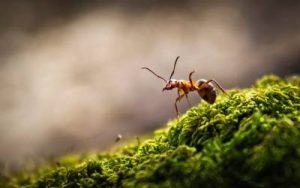
Ant on a mossy rock | natural ant predators in Georgia

Ant on a mossy rock | natural ant predators in GeorgiaAnts can be found in practically every corner of the world, but that doesn’t make them any more pleasant when they are marching across your kitchen counter. Although these pests are small, a single colony can contain between 50,000 to 500,000 ants! With how large ant colonies can grow, it can be incredibly hard to get rid of them hard on your own. Although it may seem like sometimes you are on your own in the battle against ants, natural ant predators are working alongside you to keep the ant population in check.

What Eats Ants?

Ants have many natural predators that help regulate the ant population. Below are a few Georgia native animals that enjoy munching on ants:

  • Armadillos: Armadillos use their long claws to dig in the ground in search of insects. Ants are one of their favorite snacks.
  • Birds: Birds such as sparrows, starlings and woodpeckers are known to eat ants. In addition to eating ants, some birds participate in a ritual called anting where the bird, for unknown reasons, will kill and rub dead ants on their body.
  • Insects: Many common insects will also eat ants as part of their diet. Beetles, praying mantises, spiders and even other ants will feast on ants.
  • Rodents: Rodents are opportunistic eaters and some are known to eat a wide range of small insects, including ants.
  • Bears: When young bears are transitioning to eating solid food, they will often search for ant colonies to eat. Once a bear is mature, they will usually only eat ants in times of food scarcity.

How to Prevent Ants

The most important step in keeping an ant free home is ant prevention. Ants are able to enter your home through even the smallest hole of crack. Examine the exterior of your house regularly, sealing any entrance points. This will not only help prevent ants in your home but also a multitude of other pests.

Ants will commonly enter a home in search of food and can often be found marching across your kitchen floor or counter.  Make sure to clean any spills or crumbs quickly and keep food in airtight containers.

Although these measures will help keep ants out of your home, the best way to keep ants away for good is by hiring a trusted local pest control company.

Professional Ant Extermination

While natural ant predators are helpful in controlling the ant population, the most effective way to keep ants out of your home is through professional ant extermination. Trusted exterminators, such as those at Active Pest Control, not only eliminate existing ant infestations but also work with you to create a plan to prevent future pest invasions.

Active Pest Control has been keeping Georgia homes pest free for generations. We understand the frustration caused by ant infestations and are dedicated to providing long-lasting solutions. If you’re tired of dealing with ants or any other pests in your home, contact the experts at Active Pest Control today for a free quote!

Meet Will Lowery

Have you ever wondered what has made Active Pest Control so successful and why so many of your friends and neighbors have turned to us for effective, environmentally responsible pest control solutions? Part of the reason lies with the fact that we have more than 43 years of experience in local pest pressures, and part of the reason is that we have access to the most advanced tools and technologies that work to combat pests. Some people love the Active Pest Control‘ roots that are tied to our community; and others like the fact that we are an industry leader and hold QualityPro Certification.

But one of the biggest reasons that so many trust the reliable services offered by Active Pest Control is that we hire only the best and the brightest. Our employees are some of the most qualified in the industry, and they exhibit the time-honored values of honesty, integrity, and professionalism. We carefully screen our prospective employees to ensure that the person that knocks on your door from our company is trustworthy, respectful, and knowledgeable. Before we allow someone to don the uniform that bears our name, we want to know that you will be as pleased with your pest control technician as you are with our services.

Each month, we take great pride in introducing one of our stellar employees to you in this blog. This month we have chosen to highlight one of our Administrative Trainer’s, Will Lowery. Will works hard to ensure that the services you receive are appropriate and that they are performed to exacting standards. He is certified in HPC (home pest control) and WDO (wood destroying organisms); with his direction in training employees, you can be sure that your pest issues will be quickly resolved and that the conditions that drew them in will be addressed!

It is no wonder that Will is certified in wood destroying organisms since termites are his favorite pest. Termites are always a challenge, and understanding the habits and habitats of these elusive pests is an important part of understanding how to eliminate and control them. Staying abreast of the ever-changing tools and technologies that are effective at combating termites takes a lot of studies and hands-on training, which is something that doesn’t deter Will Lowery. He states, “I love to learn new things,” which is a very useful attribute when battling the “silent destroyer”!

When Will is not busy supporting the offices and their training efforts, he loves to spend time with his family. He and Beth have been married for 7 years and are the proud parents of two energetic boys, Lucas and Jacob!

The next time you need pest control services for your home, give Active Pest Control a call. Even if you do not see Will Lowery on the other side of your door, you will certainly meet someone that he has influenced and is worthy to wear our uniform.

Meet David Baginski

Another month, another employee to highlight; and although these months seem to fly by at a faster rate, we never run out of exemplary people from our ranks to introduce you to. This is partly due to the fact that we have so many highly trained experts here at Active Pest Control, and it is partly because our company is always growing and always expanding and always adding worthy men and women to the Active Pest Control family.

This month the spotlight is on David Baginski. David has been an integral member of the Active Pest Control family for six and a half years now. He diligently serves as a pest control technician who is committed to the successful eradication of pests in and around your home. He particularly loves to deal with roaches, bed bugs, and fleas, but he enjoys the challenges that all pests pose. In fact, when asked what his favorite pest is, David responded, “roaches, bed bugs, fleas. I love them all!” – And, of course, by ‘love’ he means that he loves to discover their hiding places and eliminate them completely from your home!

One of David’s favorite things about working here at Active Pest Control is that he enjoys the new customer interactions daily; and there surely are plenty of those each day because we are a company on the move, growing and adding to our Active Pest Control customer family continuously.

David is a family man and has been married to his ‘wonderful’ bride for almost 17 years. Together, they are raising two sons who are the joys of their life. When David is not actively solving your pest issues, he can be found spending time with his family or casting a line in his favorite fishing hole…a destination that will have to remain secret for now, as most fishing holes must.

When pests threaten the safety of your family or the integrity of your home, turn to the team that thousands of your friends and neighbors have trusted for more than 40 years with their pest control needs. Perhaps it will be David Baginski that shows up at your door; but if not, you can be assured that it will be someone that is equally qualified and equally worthy to don the Active Pest Control emblem and who will be equally adept at solving your pest control issues. You have our word on that.

Roaches Love Wet Weather

Do you like to be cold and wet? As it turns out, neither do cockroaches. In fact, it doesn’t even have to be both at the same time. If it is too cold outside, cockroaches will look for a warm place to hide. If heavy rains saturate the ground, cockroaches will look for shelter above the rising waterline. Both of these can drive them into man-made structures. If you own a man-made structure, and you’d prefer to not have roaches getting in, there are a few things you can do.

Roach Exclusion Tips:

  • Keep things as clean as possible. While it is impossible to completely rid a home of everything cockroaches can feed on, you can deter roaches by reducing food sources, such as bread crumbs under the toaster, food particles in your rug, plates left on end tables and coffee tables, and juice spills under the fridge.
  • Don’t leave pet food dishes on the floor between meals.
  • Store all foods in the fridge or inside tightly sealed containers that pests cannot get into, such as glass or plastic.
  • Try to keep your home as dry as possible by using strategically placed fans and dehumidifiers.
  • Store all trash in cans with tightly fitting lids. Cockroaches can find a lot to eat in a trash can.
  • Make sure there are no food sources for roaches outside, such as pet food, bird seeds or leftover barbecue items.

    Inspect your exterior walls for gaps, cracks, and holes. Use a caulking gun to fill holes in until you have the money to do an official repair.

  • Make sure all of your screens are present and in good repair.
  • Make sure all door sweeps make good contact, and that weather stripping on sliding doors have a good seal.

If you do the above, you can make your home harder to infiltrate and less desirable for cockroaches to live in, but be aware that these are resilient and resourceful insects. They are able to climb walls, walk across ceilings, and compact their bodies to squeeze through cracks. Some roaches can even fly. You’re not going to be able to fully exclude them without an application of insecticide. For this, you should trust a professional pest technician. Not only will a professional know where to apply these products, they will follow strict governmental guidelines to ensure that it is done safely.

Is it cold or wet around your home? Call Active Pest Control and get the protection you need to keep cockroaches out.

Nobody Likes Spiders

Do you like spiders? Are you thrilled when a spider slowly lowers itself down in front of your eyes as you are eating your breakfast? Are you glad when you are walking to the bathroom at two in the morning and you get a spider web across your face? Maybe you enjoy it when you look up and see a big spider sitting on the side of your baby’s crib? While there are actually some people who do like spiders, even love them, most people do not want these creepy critters living in their homes with them. Although lots of different spiders can get into people’s homes, today we will talk about the common house spider, some facts, and how you can keep them out of your home.

There are several different types of house spider, but we’re focusing this article on the most common house spider which is also sometimes called the American house spider. Here are a few interesting facts you may not know about the common house spider.

  • These spiders live in houses, which is where they get their name. But they don’t only live on webs in the corners of your ceiling. Sometimes they live inside walls.
  • Female common house spiders can be up to twice as large as their male counterparts, with the females growing up to 6 mm long.
  • These spiders have 8 single-lens eyes, and their body is divided into two parts called the cephalothorax and the abdomen.
  • You can tell you have house spiders, even if you don’t see the spiders themselves, by the presence of their webs.
  • House spiders will often spin several webs in various places before they make one in a place that is suitable to catch prey.
  • Even if you don’t see spiders inside your home, you may still have large numbers of them living within your walls if there is enough food for them there.
  • House spiders typically catch and eat anything from roaches to earwigs, and from mosquitoes to moths.

Although the common house spider will not bite you unless you accidentally bring it against your skin and it feels threatened, they are still no fun to have invading your home. And take note; if you do have these spiders, then you also have other pests since these spiders will not stay in a home without sources of food.

The fact is it is extremely difficult to get rid of house spiders because they tend to hide out in places that you can’t see or reach. Some are tiny. Some are very large. But all are a nuisance! And all are an indication that you have other pest issues.

There are some steps you can take to discourage pests from staying, such as sealing up food sources and keeping your home clean and dry, but to get rid of the common house spider and all of the “foods” they eat you need the help of a pest control company. With decades of experience and the most advanced equipment and training, the experts here at Active Pest Control can turn common house spiders into uncommon house spiders. Every time!

What Are Flying Ants?

Are you finding winged ants on the insides of your windows? Are you curious how those ants got inside your house? It can be mysterious dealing with these pests every spring, but don’t worry. You’ve come to the right place. Here is everything you need to know about flying ants.

Entomology of Flying Ants

When you find these pests in your home, the first thing you need to know is that flying ants are not a species of ant. They are a caste of ant. Flying ants (also known as winged reproductives or alates, or swarmers) are only one part of a thriving colony.

The cycle of a colony begins and ends with male and female reproductives. In the beginning, winged reproductives take to the air, mate with each other, and then establish a colony. The females become the queens of new colonies, and the males (also known as drones) die off.

When a colony has matured, it will begin to produce new male and female reproductives in order to establish new colonies and spread. When you see them on the inside of you windows, this is a bad sign.

What Flying Ants Mean

How long have you been vacuuming those flying ants up? If this is a chore you do every spring, you may want to stop and take a closer look at those ants. Not all flying ants are created equal. If your ants are large and black, you might want to call an expert. Carpenter ants cost U.S. property owners millions of dollars every year by burrowing into wood and weakening support structures. If you’ve been seeing these ants for years, you may have several mature colonies inside the walls of your home.

What You May Find Surprising About Carpenter Ants

If you’ve read this far and wondered how you could possibly have several mature carpenter ant nests in your home when you only see a few random ants in your kitchen, we understand. The truth is carpenter ants do most of their living and working within the walls of your home and typically forage for food outside of the nest at night so encounters with these pests will be uncommon.

When you see winged ants in your home it is important to get a professional opinion. The experts here at Active Pest Control know how to track and eradicate these elusive pests. That means safety for your equity.

Don’t let carpenter ants wreck your home.

Ants in My Chattanooga House?

It’s springtime again – Time to enjoy the fresh air, beautiful sunshine, colorful blossoms, the smell of flowers in the air, and lines of ants on the kitchen floor. Okay, you probably aren’t going to enjoy that last one, but ants are definitely part of spring. When temperatures warm, ants will make their presence known. Here are some ants you’re likely to find in or around your Chattanooga home.

Little Black Ants

These tiny creatures are dark brown or jet black and can be found all throughout the United States. They range in size from the 1.5mm worker ants, to the 4mm queens. They have antennae with 12 segments, and a thorax that is unevenly rounded. While these tiny critters have a stinger, it is too small to be a threat to humans or pets. Being an omnivorous insect, little black ants will eat anything from sweets and vegetables to greasy, oily foods. If they get into your pantry or on your counters, they can contaminate foods, but other than this, they are only a nuisance pest.

Odorous House Ants

These stinky little critters also live in most of the country and measure from about 1/16 to ⅛ of an inch in length. They have brown to black bodies, twelve segments in their antennae, and a thorax that is uneven. Foods these ants like to eat include honeydew, meats, sugary foods, dairy products, and vegetables. Odorous house ants, like the name suggests, give off a bad smell when they are crushed. It has been described as the smell of rotten coconut. Other than this unpleasant characteristic and the possibility of contaminating food items, these ants are mostly a nuisance pest.

Carpenter ants

Carpenter ants are black or reddish-black. They are easily distinguished from other ants by their larger size and their heart-shaped heads. They have a smooth thorax, can be found throughout the U.S., and are far more than just a nuisance.

If you are seeing little black ants or odorous house ants in your home, there is little cause for alarm, but when carpenter ants appear, you’re going to want to take notice. Carpenter ants tunnel through wood and create galleries, and it is possible for these pests to be inside the wood of your home or inside decks and outbuilding for many years without being detected.

If you’re seeing ants in your Chattanooga home, Active Pest Control has a solution that will work for you. With 5 decades of experience and a ranking as one of the top 25 pest control companies in the United States, we are equipped to take care of any pest problem you’ll find in your home this spring–including ants.

Spring is better without ants. Give it a try with pest control you can trust from Active Pest Control.

Keeping Cockroaches Out

They slip out of cracks at night to eat the rotten sludge between your stove and counter. Their disease-covered feet sink into the butter someone left out on your sideboard. They leave feces on the inside of your toaster. Grossed out yet? You should be. Cockroaches are probably the most disgusting creatures the world has ever known. But what’s worse is they are notoriously hard to get rid of. Some cockroaches are able to survive an entire month without food, and cockroaches in general are extremely adaptable to many environments. Legend has it that they could survive a nuclear war, though this is a bit of an exaggeration. They can withstand radiation poisoning for a relatively long period, but they will ultimately succumb to its effects.

Keeping Roaches Out

Yes, they may be hard to get rid of but keeping them out in the first place is possible with a little hard work.

  • Repair any water leaks in pipes, sinks, appliances, etc. Dry up any standing water around tubs, toilets, or anywhere else wetness can be found. Place fans or dehumidifiers in places that are moist or humid.
  • Carefully clean your kitchen, paying close attention to hard-to-reach places such as between the stove and counter, underneath the refrigerator, and inside your toaster.
  • Wipe out cupboards and drawers with a soapy cloth.
  • Don’t leave dirty dishes on the counter. If you can’t wash them right away, place them in a sink full of soapy water.
  • Store all food in the refrigerator or inside sturdy containers with tightly fitted lids.
  • Vacuum thoroughly, especially where there are food remnants present. Don’t forget areas such as underneath couch cushions and behind beds.
  • Only put pet food down at mealtimes, otherwise; store the food in a container with a lid.
  • Carefully inspect the outside of your home, looking for gaps and cracks. Pay attention to areas where appliances, pipes, or wires enter the home. Seal up any holes using a caulking gun.
  • Check all screens and door sweeps and make sure they are in good repair.
  • Make sure mulch, trees, bushes, and other vegetation are kept at least a foot or more from your home. Roaches and other pests use these as bridges.
  • Dry up any standing water near your foundation. If you have birdbaths, place them as far from your house as possible.
  • Do not leave pet food, or any other food, outdoors. Clean your grill area after each use. If you have bird feeders, consider removing them or placing them far from your home.
  • Make sure all garbage containers have tightly fitted lids and store them away from your home.

Once They Have Infested:

It may be possible to keep cockroaches out on your own. However, once they have breached your defenses and taken root in your house, they can be extremely difficult to eradicate without professional help. Keep in mind that, if you have seen one cockroach there are most likely hundreds, if not thousands, more living in your walls. Here at Active Pest Control, we offer several pest plans to help you live pest-free. With almost 40 years of pest control experience, Active Pest Control can get rid of cockroaches for you. Don’t wake up to cockroach footprints in your butter. Get help today.

Your Pets & Pests

Pet owners know that when the weather warms up it’s time to think about pest control for their pets. We have a black lab who loves to be outside as much as possible. With our landscaping being a work in progress it is extremely important for us to treat him for things like fleas and ticks. We also need to watch out for heartworms that are transmitted through mosquito bites. We pet owners love our pets as part of our family. It is important to keep them healthy and safe all year long. Keeping them safe from summer pests is just one of the many things we do to keep our furry friends healthy and safe.

Let us start with flea prevention. This is a very common problem to have with household pests. Fleas can easily jump onto your pet and make their way into your home. They can become an incredible nuisance to your pet and your home. They leave itchy red bite marks on their body. Sometimes your pet can be allergic to fleas and have a more serve reaction causing them to lose hair or develop rashes. The best way to prevent fleas from using your pet as a host this summer is to treat them regularly with a flea repellent treatment. There are many different options to choose from. They have ointments to apply on their backs or a pill to take once a month. It is best to consult your veterinarian as to what type of flea control is best for your pet.

Ticks are also a common problem to deal with during the warmer months. Ticks will hide out in tall grassy areas waiting for their next host. Once they find one they latch on. They can transmit diseases to your pet like Lyme disease. This can be a very serious threat to your pet. The threat of ticks has become so common that tick repellent is now usually included in flea repellent products. Most flea repellents will work to repel fleas and ticks. Ask your veterinarian about what options would work best for your pet.

Mosquitoes are not just a nuisance to your pets during the summer months, they can also transmit heartworms to your dog or cat. Heartworms are a serious threat specifically to dogs. Once a dog has been bitten by an infected mosquito it takes about 7 months for the larva to develop into adult worms. They spread out in the heart and lungs. These worms can be 12” long and live 5-7 years. A dog can have up to 250 of these worms in its system. It is very important to treat your dog with heartworm medication throughout the mosquito season. Ask your vet about heartworms and how to keep your pet’s heartworm free.

If you would like to pest proof your property, than you need to contact the professionals here at Active Pest Control. We offer pest prevention plans that are safe for your pets. This can really make a difference on how you and your pets enjoy the outdoors this summer. We can greatly lessen the chance of exposure that you and your four-legged family member have to tics, mosquitoes, fleas and many other common pests! Show your pets some real love with a home pest prevention plan custom tailored for you.